
What actually is 'charge'?
-
peter2100
- Posts: 4
- Joined: Tue Jan 03, 2012 7:21 am
What actually is 'charge'?
I know how the word is used and the description of what happens but what is it actually? When something is positively or negatively charged what is it that makes it so? Does anyone even know? Why do they attract or repel? What is actually going on?
-
saul
- Posts: 184
- Joined: Tue May 20, 2008 2:06 am
Re: What actually is 'charge'?
Great question! I heard that when asked this question Dirac said "It's a spin".peter2100 wrote:I know how the word is used and the description of what happens but what is it actually? When something is positively or negatively charged what is it that makes it so? Does anyone even know? Why do they attract or repel? What is actually going on?
Charge is a divergence of electric field. Any space-time disturbance that can maintain such a divergence due to it's internal motions or energies, we call a charged particle. This answer is unsatisfactory to me but at least puts us on common ground to start a better answer. There are numerous analogies to help illustrate, usually involving fluid mechanics. Personally I like the hurricane analogy, a hurricane is like a charged particle, in that it is a relatively stable structure that maintains a non-zero divergence of a gradient of a scalar field.. air pressure. A charged particle maintains a non-zero divergence of the gradient of electric potential.
Cheers --
-
Michael V
- Posts: 479
- Joined: Thu Feb 09, 2012 4:36 pm
- Location: Wales
Re: What actually is 'charge'?
saul,
Charge is not "electric", that is merely a human interpretation of a kinetic phenomena.
Charge is the quantum aether particle emissions of protons and electrons. - that is what it actually is. As such charge does not intrinsically possess the property of positive or negative - that is merely an effect of interaction.
Michael
Charge is not "electric", that is merely a human interpretation of a kinetic phenomena.
Charge is the quantum aether particle emissions of protons and electrons. - that is what it actually is. As such charge does not intrinsically possess the property of positive or negative - that is merely an effect of interaction.
Michael
-
D_Archer

- Posts: 1255
- Joined: Sat Apr 18, 2009 4:01 am
- Location: The Netherlands
Re: What actually is 'charge'?
This is very clear >
http://milesmathis.com/charge.html
Daniel
http://milesmathis.com/charge.html
Regards,charge is the summed mass of the sub-particles
Daniel
- Shoot Forth Thunder -
-
Michael V
- Posts: 479
- Joined: Thu Feb 09, 2012 4:36 pm
- Location: Wales
Re: What actually is 'charge'?
Daniel,
Off topic, but worthy of mention whilst I finish reading about Mathis charge:
[quote"Miles Mathis"]With gravity, we assign the term directly to the force. Gravity creates the force or is the force. Mathematically, gravity is an acceleration caused by the force.
g = F/m = N/kg [/quote]
This small quote reveals some of the Mathis nonsense: "Mathematically, gravity is an acceleration".
This is one of the many places that he has mislead himself. Gravity is in no way an acceleration. Gravity is the force, the effect of the force is an acceleration - this is the route of his implausible attempts to assign gravity as an acceleration - he tells you the right answer, and then twists it into the wrong answer for his own mathematical purposes - no wonder he refuses to assign gravity to the only possible mechanical solution.
Michael
Off topic, but worthy of mention whilst I finish reading about Mathis charge:
[quote"Miles Mathis"]With gravity, we assign the term directly to the force. Gravity creates the force or is the force. Mathematically, gravity is an acceleration caused by the force.
g = F/m = N/kg [/quote]
This small quote reveals some of the Mathis nonsense: "Mathematically, gravity is an acceleration".
This is one of the many places that he has mislead himself. Gravity is in no way an acceleration. Gravity is the force, the effect of the force is an acceleration - this is the route of his implausible attempts to assign gravity as an acceleration - he tells you the right answer, and then twists it into the wrong answer for his own mathematical purposes - no wonder he refuses to assign gravity to the only possible mechanical solution.
Michael
-
Shrike
- Posts: 75
- Joined: Thu Mar 10, 2011 1:29 pm
- Location: Netherlands (Nederland, Holland)
Re: What actually is 'charge'?
Im not arguing who's right or wrong but if i'm not mistaken is that almost every where gravity is expressed as an acceleration.Michael V wrote: This small quote reveals some of the Mathis nonsense: "Mathematically, gravity is an acceleration".
This is one of the many places that he has mislead himself. Gravity is in no way an acceleration. Gravity is the force, the effect of the force is an acceleration - this is the route of his implausible attempts to assign gravity as an acceleration - he tells you the right answer, and then twists it into the wrong answer for his own mathematical purposes - no wonder he refuses to assign gravity to the only possible mechanical solution.
Michael
so why is his notion that gravity is acceleration so outlandish ??
--------------
edit: added the word almost.
-
Michael V
- Posts: 479
- Joined: Thu Feb 09, 2012 4:36 pm
- Location: Wales
Re: What actually is 'charge'?
Shrike,
Michael
You are mistaken. For example, g is "the acceleration due to gravity". Gravity is the force, the acceleration is due to the force. Miles' attempt to apply the acceleration as the gravity is a mathematical fudge....if i'm not mistaken is that almost every where gravity is expressed as an acceleration.
Michael
-
D_Archer
- Posts: 1255
- Joined: Sat Apr 18, 2009 4:01 am
- Location: The Netherlands
Re: What actually is 'charge'?
Dear Michael V,
Mathis uses Einsteins equivalence principle to use gravity as an acceleration in his mathemathics. This way he can calculate in an Euclidean field.
Gravity is then only a function of radius and an acceleration out, nothing wrong with this conceptually.
Regards,
Daniel
Mathis uses Einsteins equivalence principle to use gravity as an acceleration in his mathemathics. This way he can calculate in an Euclidean field.
Gravity is then only a function of radius and an acceleration out, nothing wrong with this conceptually.
Regards,
Daniel
- Shoot Forth Thunder -
-
Michael V
- Posts: 479
- Joined: Thu Feb 09, 2012 4:36 pm
- Location: Wales
Re: What actually is 'charge'?
Daniel,
Einstein equivalence principle is also incorrect.
Michael
Einstein equivalence principle is also incorrect.
No it is not. Physically this is utterly untrue. It may suffice as a mathematical convenience, but surely that is not the object of the endeavour. A method that puts the maths before the physics will also avoid both the process and any understanding of that physical process - I would argue that this a conceptual error.Gravity is then only a function of radius and an acceleration out
Michael
-
Michael V
- Posts: 479
- Joined: Thu Feb 09, 2012 4:36 pm
- Location: Wales
Re: What actually is 'charge'?
Daniel, peter2100,
To a some extent Miles is correct, at least in so much as he realises that "charge" is the emission of sub-particles from electrons and protons. Unfortunately, his logic is flawed in so many places that he ends with a misleading construction. Because his gravity model, his photon and particle model, are all incorrect he has mislead himself wildly.
He analyzes the Coulomb-Ampere relationship, but ignores the definition of charge. Charge is defined as e, the fundamental unit of charge which is equivalent to 1.6x10⁻¹⁹ Joules. Charge has actually been defined as energy (because energy is a definition of work). Yes, charge is measured as a property of the sub-particles that are the charge, but it is not mass, it is energy. At a velocity of c and via E=1/2mv2, 1.602...x10-19 Joules represents a mass of 3.565x10-36 kg per second.
This mass of "charge" is linked to electron and proton mass, and to electron radius, to the mass of a quantum via h and ultimately to alpha, the fine structure constant, which is the density of the electromagnetic quantum aether field.
The electron orbit of a hydrogen atom (i.e. the Bohr radius, a0) can be defined as:
a0 = h / 2π me c α
(where h is Planck's constant, me is electron mass, c is the speed of light, α is alpha, the fine structure constant)
also, a0 = re / α2
(where re is electron radius)
so the orbital distance is 2πa0, which equals 2πre / α2
At a circular orbital period of
α2 / π seconds and a orbital distance of 2πre / α2, then the number of orbits per second is π / α2
The "disc" area of an electron is πre2
so the volume described by an electron orbiting at π / α2 orbits per second is 2π3re3 / α4 = 4.89x10⁻³⁴ m3
h = 6.626x10⁻³⁴ J which at c represents a mass of 1.47x10-50 kg, the mass of a quantum aether particle.
A charge mass per second of 3.565x10-36 kg equates to 2.42x10¹⁴ quantums per second
The the number of quantum particles emitted as charge by an electron per second divided by the volume of space occupied by an orbiting electron per second is:
2.42x10¹⁴ / 4.89x10⁻³⁴ m3 = 4.94x1047 quantum particles per cubic metre
Particle density x Particle mass = 4.94x1047 x 1.47x10-50 = 0.00729
Alpha (α), the electromagnetic fine structure constant is 0.0072973525376
α is the electromagnetic quantum aether field density, e is the kinetic energy of the quantum aether charge emitted by an electron.
The relationship between electromagnetic quantum aether field density, electron size and charge emitted per second is quite clear.
Michael
To a some extent Miles is correct, at least in so much as he realises that "charge" is the emission of sub-particles from electrons and protons. Unfortunately, his logic is flawed in so many places that he ends with a misleading construction. Because his gravity model, his photon and particle model, are all incorrect he has mislead himself wildly.
Wouldn’t it have been more logical to explain the electrical field in the same general terms as the gravitational field?
Somewhat of a contradiction.... The reason, of course, is that the electrical force is caused by a large number of sub-particles and (according to my theory) the gravitational force is not.
He analyzes the Coulomb-Ampere relationship, but ignores the definition of charge. Charge is defined as e, the fundamental unit of charge which is equivalent to 1.6x10⁻¹⁹ Joules. Charge has actually been defined as energy (because energy is a definition of work). Yes, charge is measured as a property of the sub-particles that are the charge, but it is not mass, it is energy. At a velocity of c and via E=1/2mv2, 1.602...x10-19 Joules represents a mass of 3.565x10-36 kg per second.
This mass of "charge" is linked to electron and proton mass, and to electron radius, to the mass of a quantum via h and ultimately to alpha, the fine structure constant, which is the density of the electromagnetic quantum aether field.
The electron orbit of a hydrogen atom (i.e. the Bohr radius, a0) can be defined as:
a0 = h / 2π me c α
(where h is Planck's constant, me is electron mass, c is the speed of light, α is alpha, the fine structure constant)
also, a0 = re / α2
(where re is electron radius)
so the orbital distance is 2πa0, which equals 2πre / α2
At a circular orbital period of
α2 / π seconds and a orbital distance of 2πre / α2, then the number of orbits per second is π / α2
The "disc" area of an electron is πre2
so the volume described by an electron orbiting at π / α2 orbits per second is 2π3re3 / α4 = 4.89x10⁻³⁴ m3
h = 6.626x10⁻³⁴ J which at c represents a mass of 1.47x10-50 kg, the mass of a quantum aether particle.
A charge mass per second of 3.565x10-36 kg equates to 2.42x10¹⁴ quantums per second
The the number of quantum particles emitted as charge by an electron per second divided by the volume of space occupied by an orbiting electron per second is:
2.42x10¹⁴ / 4.89x10⁻³⁴ m3 = 4.94x1047 quantum particles per cubic metre
Particle density x Particle mass = 4.94x1047 x 1.47x10-50 = 0.00729
Alpha (α), the electromagnetic fine structure constant is 0.0072973525376
α is the electromagnetic quantum aether field density, e is the kinetic energy of the quantum aether charge emitted by an electron.
The relationship between electromagnetic quantum aether field density, electron size and charge emitted per second is quite clear.
Michael
-
Michael V
- Posts: 479
- Joined: Thu Feb 09, 2012 4:36 pm
- Location: Wales
Re: What actually is 'charge'?
I forgot to mention:
Also, a circular orbital period of α2 / π seconds, together with the masses of a single electron and a single proton, via the circular orbit equation, give a gravitational factor of 1.216x10⁷. This defines the gravitational interaction between a single electron orbiting a single proton.
Furthermore the density of a proton divided by the density of an electron is rp/re / α2
(where rp is the radius of a proton and re is the radius of an electron)
The gravitational relationship between the single electron and proton is defined with a gravitational factor of 1.216x10⁷, and not by coincidence:
1.216x10⁷ x α2 / electron density = 1.216x10⁷ x rp/re / proton density = 6.66x10⁻¹¹
The presently given value for G0, the Newtonian gravitational "constant" is 6.67x10⁻¹¹; I would suggest that it is not constant but depends entirely on the density of the masses involved.
Michael
Also, a circular orbital period of α2 / π seconds, together with the masses of a single electron and a single proton, via the circular orbit equation, give a gravitational factor of 1.216x10⁷. This defines the gravitational interaction between a single electron orbiting a single proton.
Furthermore the density of a proton divided by the density of an electron is rp/re / α2
(where rp is the radius of a proton and re is the radius of an electron)
The gravitational relationship between the single electron and proton is defined with a gravitational factor of 1.216x10⁷, and not by coincidence:
1.216x10⁷ x α2 / electron density = 1.216x10⁷ x rp/re / proton density = 6.66x10⁻¹¹
The presently given value for G0, the Newtonian gravitational "constant" is 6.67x10⁻¹¹; I would suggest that it is not constant but depends entirely on the density of the masses involved.
Michael
-
iantresman

- Posts: 37
- Joined: Mon Mar 17, 2008 3:07 pm
- Contact:
Re: What actually is 'charge'?
Electrons have a negative charge. Protons have a positive charged. Usually substances have equal numbers of both, so that the overall charge cancels, and a substance has no net charge.
But if we rub some substances, such as a balloon against a nylon sweater, we are able to remove some of the electrons, resulting the balloon acquiring a net positive charge, and the balloon is said to be charged. Of course the removed electrons are transferred to the sweater, and it becomes negatively charged.
I can also recommend Bill Beaty's webpage What is Charge, on his excellent websiter about electicity.
But if we rub some substances, such as a balloon against a nylon sweater, we are able to remove some of the electrons, resulting the balloon acquiring a net positive charge, and the balloon is said to be charged. Of course the removed electrons are transferred to the sweater, and it becomes negatively charged.
I can also recommend Bill Beaty's webpage What is Charge, on his excellent websiter about electicity.
Ian Tresman
www.plasma-universe.com
www.plasma-universe.com
-
Sparky
- Posts: 3517
- Joined: Tue Jul 20, 2010 2:20 pm
Re: What actually is 'charge'?
That's what I'd like to know....What actually is 'charge'?

What gives the electron an apparent charge of something negative?
What mechanical operation does that?
"It is dangerous to be right in matters where established men are wrong."
"Doubt is not an agreeable condition, but certainty is an absurd one."
"Those who can make you believe absurdities, can make you commit atrocities." Voltaire
"Doubt is not an agreeable condition, but certainty is an absurd one."
"Those who can make you believe absurdities, can make you commit atrocities." Voltaire
-
GaryN

- Posts: 2668
- Joined: Tue Apr 01, 2008 8:18 pm
- Location: Sooke, BC, Canada
Re: What actually is 'charge'?
When I first saw this, It got me wondering about a really large glider for a Mars mission, swooping around in the ionosphere somehow, for years maybe, taking some real closeups. Could it work?
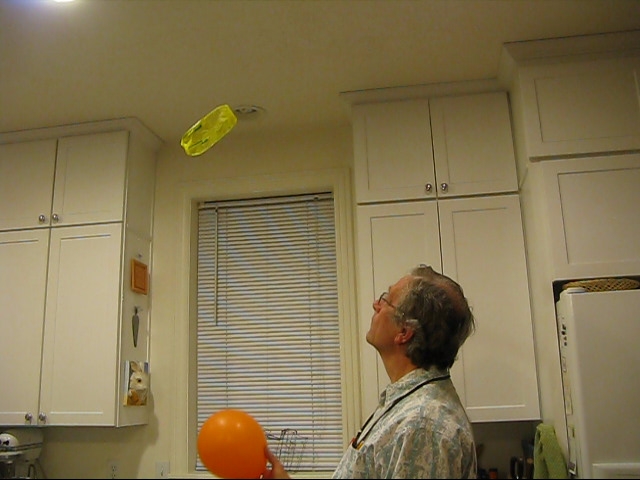
He does mention at the end of the page about objects charging to the wrong polarity sometimes, and sometimes having patches of differing polarity on the same object. Strange stuff.
http://sparkbangbuzz.com/static-flyers/ ... flyers.htm
He does mention at the end of the page about objects charging to the wrong polarity sometimes, and sometimes having patches of differing polarity on the same object. Strange stuff.
http://sparkbangbuzz.com/static-flyers/ ... flyers.htm
In order to change an existing paradigm you do not struggle to try and change the problematic model. You create a new model and make the old one obsolete. -Buckminster Fuller
-
Michael V
- Posts: 479
- Joined: Thu Feb 09, 2012 4:36 pm
- Location: Wales
Re: What actually is 'charge'?
Gary,
That balloon thing is only a bit of magnetism. That stuff about "we are able to remove some of the electrons, resulting the balloon acquiring a net positive charge" is not true, and those Bill Beaty webpages are awful - they only serve to support the Standard Model by ridiculing the possibility of alternative solutions. I am offended by such material.
Michael
That balloon thing is only a bit of magnetism. That stuff about "we are able to remove some of the electrons, resulting the balloon acquiring a net positive charge" is not true, and those Bill Beaty webpages are awful - they only serve to support the Standard Model by ridiculing the possibility of alternative solutions. I am offended by such material.
Not true - this is electromagnetic theory's flat earth (well, one of them at least)."Electrons have a negative charge. Protons have a positive charged."
Michael
Who is online
Users browsing this forum: No registered users and 10 guests