Mercury
"It can be assumed with a fair amount of probability that the planet that caused the disturbances described above [on this thread, as well!] was the planet Mercury, the Greek Hermes, the Babylonian Nebo."
"To each of the planets is ascribed a world age, and the ages of the other planets—Moon, Saturn, Jupiter, Venus, and Mars—are well discernible; the dominion of Mercury must be looked for in one of the world ages, and one of the world cataclysms was apparently ascribed to this lesser planet. Mercury was a feared god long before Mars (Nergal) became one. A
"As the name of Mount Sinai refers to Sin, the Moon, so the name of Mount Nebo in Moab where Moses died was called already in that early time by the name of the planet Mercury. Later in the seventh and sixth centuries before the present era, this god was much venerated, especially by the Chaldeans and other peoples of Mesopotamia, as the names of Nabopolassar and his son Nebuchadnezzar prove."
"In earlier times Mercury was known to the Sumerians as Enki."
"Equally pronounced was the position of Thoth, the planet Mercury of the Egyptian pantheon, the theophoric part of the name Thutmose."
"...It is characteristic that in many astronomical texts Mercury, the Greek Hermes, the Babylonian Nebo, the Egyptian Thoth, is portrayed as the planet-god which had in his dominion the physiological capacity of memory in man, as well as that of speech. According to Augustine,
"Direct information that confirms our assumption is provided by Hyginus. Hyginus wrote that for many centuries men
- 'lived without town or laws, speaking one tongue under the rule of Jove. But after Mercury explained the languages of men (whence he is called hermeneutes, "interpreter," for Mercury in Greek is called Hermes; he, too, divided the nations) then discord arose among mortals. . . .'
The Romans as well as the Greeks pictured Mercury with wings, either on his headgear or at his ankles, and with an emblem, the caduceus, a staff with two snakes winding. The double serpent (caduceus), the emblem of Mercury, is found in ornaments of all peoples of antiquity; a special treatise could be written about this subject; I found the caduceus all around the world. Mercury, or Hermes of the Greeks, was a messenger of the gods that speeded on his errand, sent by Jupiter."
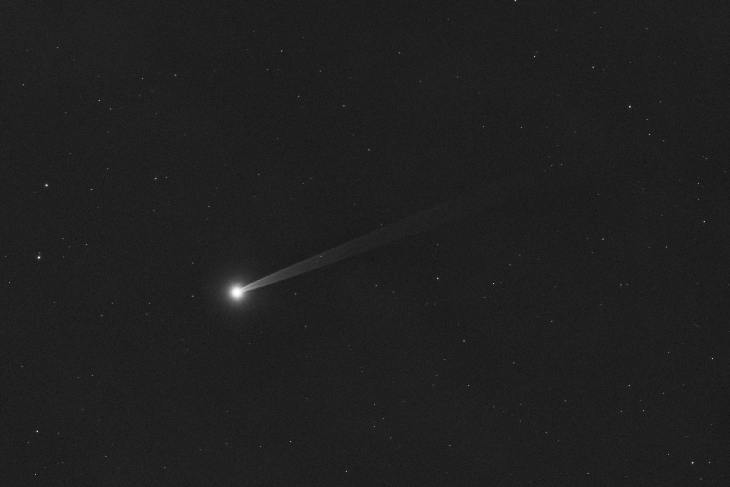
"Among the satellites that presently orbit each of the giant planets are bodies comparable in size to Mercury, or even larger. Abraham Rockenbach, whose De Cometis Tractatus Novus Methodicus we had occasion to quote when investigating the causes of the Deluge, included in his treatise also the following entry:
- 'In the year of the world one thousand nine hundred and forty-four, two hundred and eighty-eight years after the Deluge, a comet was seen in Egypt of the nature of Saturn, in the vicinity of Cairo, in the constellation of Capricorn, and within the space of sixty-five days it traversed three signs in the sky. Confusions of languages and dispersals of peoples followed. On this the text of the eleventh chapter of Genesis speaks in more detail.'"
(cont'd)