Are the planets growing?

Beyond the boundaries of established science an avalanche of exotic ideas compete for our attention. Experts tell us that these ideas should not be permitted to take up the time of working scientists, and for the most part they are surely correct. But what about the gems in the rubble pile? By what ground-rules might we bring extraordinary new possibilities to light?

Moderators: MGmirkin, bboyer

Locked
User avatar
StefanR
Posts: 1371
Joined: Sun Mar 16, 2008 8:31 pm
Location: Amsterdam

Re: Are the planets growing?

Unread post by StefanR » Fri Oct 29, 2010 9:31 am

ATMOSPHERIC OXYGEN, GIANT PALEOZOIC INSECTS AND THE EVOLUTION OF
AERIAL LOCOMOTOR PERFORMANCE

Summary
Uniformitarian approaches to the evolution of terrestrial
locomotor physiology and animal flight performance have
generally presupposed the constancy of atmospheric
composition. Recent geophysical data as well as theoretical
models suggest that, to the contrary, both oxygen and
carbon dioxide concentrations have changed dramatically
during defining periods of metazoan evolution. Hyperoxia
in the late Paleozoic atmosphere may have physiologically
enhanced the initial evolution of tetrapod locomotor
energetics; a concurrently hyperdense atmosphere would
have augmented aerodynamic force production in early
flying insects. Multiple historical origins of vertebrate flight
also correlate temporally with geological periods of
increased oxygen concentration and atmospheric density.
Arthropod as well as amphibian gigantism appear to have
been facilitated by a hyperoxic Carboniferous atmosphere
and were subsequently eliminated by a late Permian
transition to hypoxia. For extant organisms, the transient,
chronic and ontogenetic effects of exposure to hyperoxic
gas mixtures are poorly understood relative to
contemporary understanding of the physiology of oxygen
deprivation. Experimentally, the biomechanical and
physiological effects of hyperoxia on animal flight
performance can be decoupled through the use of gas
mixtures that vary in density and oxygen concentration.
Such manipulations permit both paleophysiological
simulation of ancestral locomotor performance and an
analysis of maximal flight capacity in extant forms.
http://jeb.biologists.org/cgi/reprint/201/8/1043.pdf
Giant insects might reign if only there was more oxygen in the air
Tracheae grow disproportionately


This experiment was designed to find out:

* how much room the tracheal system takes up in the bodies of different-sized beetles
* whether tracheal dimensions increase proportionately as the beetles get larger
* whether there is a limit to the size a beetle could grow in the current atmosphere

The researchers used x-ray images to compare the tracheal dimensions of four species of beetles, ranging in size from 3mm (Tribolium castaneum, about one-tenth of an inch) to about 3.5 cm (Eleodes obscura, about 1.5 inches). Beetles were not in existence during the Paleozoic period, but Kaiser's team used the insect because they are much easier to maintain in the laboratory than dragonflies, which are quite difficult.

The study found that the tracheae of the larger beetles take up a greater proportion of their bodies, about 20% more, than the increase in their body size would predict, Kaiser said. This is because the tracheal system is not only becoming longer to reach longer limbs, but the tubes increase in diameter or number to take in more air to handle the additional oxygen demands.

The disproportionate increase in tracheal size reaches a critical point at the opening where the leg and body meet, the researchers found. This opening can get only so big, and limits the size of the trachea that runs through it. When tracheal size is limited, so is oxygen supply and so is growth, Kaiser explained.

Using the disproportional increases they observed among the beetles, the researchers calculated that beetles could not grow larger than about 15 centimeters. And this is the size of the largest beetle known: the Titanic longhorn beetle, Titanus giganteus, from South America, which grows 15-17 cm, Kaiser said.

And why wouldn't the opening between the body and the leg limit insect size in the Paleozoic era, too? After all, dragonflies and some other insects back then had the same body architecture, but they were much bigger.

It is because when the oxygen concentration in the atmosphere is high, the insect needs smaller quantities of air to meet its oxygen demands. The tracheal diameter can be narrower and still deliver enough oxygen for a much larger insect, Kaiser concluded.
http://www.eurekalert.org/pub_releases/ ... 100706.php
ASU researchers link Paleozoic oxygen to insects’ size
What the authors found is that modern bugs can become “too big for their britches.” Larger beetles “devote a greater fraction of their body volume to their gas exchange structures” – 4.8 percent versus the 0.5 percent found in smaller beetles – and that the trend toward more trachea in larger insects is greatest in their legs, reaching up to 18 percent in the largest species studied.

This pattern of increased investment in the tracheal system in larger insects was completely unexpected, Harrison says.

“In vertebrates, regardless of body size, lung and heart masses are a constant fraction of body mass, while many components of the respiratory system, for example the capillaries, are reduced in larger animals,” he says.

So how can overall body size pivot on a proverbial hollow leg?

The largest insect known to exist today is a mere 6 inches in length: the South American Titanic longhorn beetle, Titanus giganteus. To grow larger would mean more trachea, based on the research of Kaiser and his colleagues. And, while an exoskeleton eliminates the need for bones and yields more interior leg room to work with, you can only stuff so many hollow tubes into an organism’s extremities before the tubes start to crowd out the muscles that need them.

In other words, it’s hard to run from a predator if there’s nothing but air in your legs.

Moreover, because of their jointed skeletons, insects have narrowed points of connection between their bodies and their extremities, so there was nowhere else to go but down. This narrow portal at the joint, the number and width of the trachea needed to supply larger leg muscles, plus the lower oxygen levels, means that modern insects lack the leg room to grow larger.

So how could a rise in atmospheric oxygen allow insects to be bigger?

Previous work at Duke, Stanford and in Harrison’s lab in the College of Liberal Arts and Sciences at ASU has shown that insects produce smaller tracheae when reared in higher oxygen levels. Thus, Harrison says, higher atmospheric oxygen levels could allow insects to grow larger before filling up their legs with tracheae.

“A next important step will be to see whether this trend really occurs in the Earth’s largest insects, and in the modern species descended from the Paleozoic giants,” Harrison says. “One thing comparative biology has taught us is that evolutionary innovation tends to allow life to overcome physical limitations.”
http://asunews.asu.edu/20071004_insects
More Oxygen Could Make Giant Bugs
To see if more richly oxygenated air could result in bigger insects, Kaiser and his colleagues investigated whether the current atmosphere was limiting insect size. They compared four species of beetles, ranging in size from about one-tenth of an inch to roughly 1.5 inches.

Specifically, the researchers looked at the size of tubes known as tracheae in the insects, which circulate air in and out of their bodies [image]. While humans possess one trachea, insects have a whole system of tracheae that connect to each other and the atmosphere.

As beetle species grew larger, X-rays showed their tracheae took up more of their bodies than the rise in their body size would predict—about 20 percent more. This is because as the beetles grew in size, their tracheae had to grow even more to handle the greater oxygen demands of the insects.

Limiting factor

Eventually tracheae cannot develop beyond a certain size. Based on their calculations, the researchers figure modern beetles cannot grow larger than about six inches. This happens to be about the size of the largest beetle known—the Titanic longhorn beetle, Titanus giganteus, from South America, Kaiser said.

If the atmosphere in the past held more oxygen, tracheae could be narrower and still deliver enough oxygen for a much larger insect. This would lead to a much larger size limit, Kaiser concluded.
http://www.livescience.com/animals/0610 ... sects.html
VARIABLE RESPONSES OF INSECT SIZE TO ATMOSPHERIC OXYGEN LEVEL ACROSS SPECIES AND POPULATIONS
Atmospheric hyperoxia has been widely hypothesized to have enabled insect gigantism in the late Paleozoic. Does hyperoxic rearing lead to larger insects? In single-generation experiments, some insects (fruitflies, some beetles) grow 2-15% larger when reared in higher-than-normal oxygen level. However, other insects (e.g. grasshoppers, caterpillars) are the same size or smaller when reared in hyperoxia. Effects of hypoxia are more consistent, with most species tested being 5-20% smaller when reared in 10% oxygen. Over seven generations, fruitflies evolve 7-14% larger sizes when reared in hyperoxia (40% O2) and 14-16% smaller sizes when reared in hypoxia (10% O2). These data suggest that acute effects of hyperoxia on body size within a species may be taxon-specific, while hypoxia effects may be more general. Across species, effects of atmospheric oxygen on size may be even more substantial. Larger beetle species devote a proportionally larger fraction of their body to the tracheal system, and extrapolation of this trend suggests that the leg orifice of the largest extant beetle species may be nearly full with tracheae. This analysis is consistent with the hypothesis that the current level of atmospheric oxygen limits the size of extant insects. Hyperoxic rearing reduces the size of tracheae, potentially releasing spatial constraints within the insect body and allowing the evolution of larger insect species. An urgent need is to test whether there were actually increases in the size of insects when oxygen levels rose in the Permian and Carboniferous, as well as decreases in insect size during hypoxic conditions in the Triassic.
http://gsa.confex.com/gsa/2007AM/finalp ... 127066.htm
Atmospheric Hypoxia Limits Selection for Large Body Size in Insects
Background

The correlations between Phanerozoic atmospheric oxygen fluctuations and insect body size suggest that higher oxygen levels facilitate the evolution of larger size in insects.
Methods and Principal Findings

Testing this hypothesis we selected Drosophila melanogaster for large size in three oxygen atmospheric partial pressures (aPO2). Fly body sizes increased by 15% during 11 generations of size selection in 21 and 40 kPa aPO2. However, in 10 kPa aPO2, sizes were strongly reduced. Beginning at the 12th generation, flies were returned to normoxia. All flies had similar, enlarged sizes relative to the starting populations, demonstrating that selection for large size had functionally equivalent genetic effects on size that were independent of aPO2.
http://www.plosone.org/article/info%3Ad ... ne.0003876
Increase in tracheal investment with beetle size supports hypothesis of oxygen limitation on insect gigantism
Abstract

Recent studies have suggested that Paleozoic hyperoxia enabled animal gigantism, and the subsequent hypoxia drove a reduction in animal size. This evolutionary hypothesis depends on the argument that gas exchange in many invertebrates and skin-breathing vertebrates becomes compromised at large sizes because of distance effects on diffusion. In contrast to vertebrates, which use respiratory and circulatory systems in series, gas exchange in insects is almost exclusively determined by the tracheal system, providing a particularly suitable model to investigate possible limitations of oxygen delivery on size. In this study, we used synchrotron x-ray phase–contrast imaging to visualize the tracheal system and quantify its dimensions in four species of darkling beetles varying in mass by 3 orders of magnitude. We document that, in striking contrast to the pattern observed in vertebrates, larger insects devote a greater fraction of their body to the respiratory system, as tracheal volume scaled with mass1.29. The trend is greatest in the legs; the cross-sectional area of the trachea penetrating the leg orifice scaled with mass1.02, whereas the cross-sectional area of the leg orifice scaled with mass0.77. These trends suggest the space available for tracheae within the leg may ultimately limit the maximum size of extant beetles. Because the size of the tracheal system can be reduced when oxygen supply is increased, hyperoxia, as occurred during late Carboniferous and early Permian, may have facilitated the evolution of giant insects by allowing limbs to reach larger sizes before the tracheal system became limited by spatial constraints.
http://www.pnas.org/content/104/32/13198.abstract
Effects of Insect Body Size on Tracheal Structure and Function
Abstract
Fossilized insect specimens from the late Paleozoic Era (approximately 250 million years ago) were significantly larger than related extant species. Geologic estimates suggest that atmospheric oxygen in the late Paleozoic Era was 35%. These findings have led to a prominent hypothesis that insect body size may be limited by oxygen delivery. Empirical evidence from developing Schistocerca americana grasshopper experiments suggests that larger/older animals are not more sensitive. Larger/older S. americana grasshoppers have a greater tidal volume at rest in hypoxia as compared to smaller animals. During jumping, larger S. americana grasshoppers have increased fatigue rates but the jumping muscle also consumes significantly more oxygen than smaller animals, suggesting that the tracheal system does not limit oxygen delivery. Larger/older grasshoppers were also found to have more tracheoles in their jumping muscle to promote increased diffusive oxygen delivery. Using real time x-ray synchrotron phase-contrast analysis, we have found that larger/older grasshoppers also have a greater proportional volume of abdominal tracheae and air sacs per body mass than smaller/younger grasshoppers to enhance convective oxygen delivery. To better understand if internal PO2 changes may be related to the increase in tracheal structure of larger/older grasshoppers, we have begun to use electron paramagnetic resonance to measure internal PO2 in the femoral hemolymph at rest and recovery during jumping. We have demonstrated that the femoral oxygen stores are signifi- cantly depleted during the on-set of jumping in adult S. americana grasshoppers. If larger S. americana grasshoppers have proportionally more respiratory structures throughout their body to help maintain their internal PO2, the greater relative amount of body mass dedicated to respiratory structures may inhibit overall insect body size by reducing the amount of energy or space dedicated to other tissues. However, future interspecific studies are needed to better separate the effects of development and body size per se on the insect tracheal system.
http://www.springerlink.com/content/r61803xn8g761422/
The illusion from which we are seeking to extricate ourselves is not that constituted by the realm of space and time, but that which comes from failing to know that realm from the standpoint of a higher vision. -L.H.

User avatar
webolife
Posts: 2539
Joined: Mon Mar 17, 2008 2:01 pm
Location: Seattle

Re: Are the planets growing?

Unread post by webolife » Fri Oct 29, 2010 1:55 pm

Everything StefanR said.
In addition, there are many different designs for animal adaptation to flight, from non-fliers through fliers. Every major class, and many phyla of animals have adaptations for flight, not just birds. Even among the fliers, a large variety of designs are found, including several different approaches to tensegrity/structure. These designs involve and include much variety:
*wing shape, including membranous [sinewy, skin or paper thin], feathered, finned, etc.
*bone structure [thin, hollow, elongated, etc.]
*respiratory/pneumaticity considerations
*musculature [eg. among birds, my backyard hummingbirds employ a different musculature from bushtits, despite being the same size]
*take-off mechanisms [eg. ducks, a relatively small size, require a long horizontal take-off, whereas eagles, relatively large, make a short vertical leap to achieve "air"]
*habitat/ground state [eg. bats/cave ceilings vs. eagles/aeries]
*flight styles [gliders, soarers, flappers, hoverers, etc.]
*flight during only certain life stages [eg. caterpillars don't]
*other vision, diet, metabolism [oxygenation], or miscellaneous considerations
And the assumption that pterosaurs flight is most like birds, is just that, an assumption. One paradigm for flight may not fit the pterosaurs, and another may. Let's not be too quick to conclude they flew like any existing birds.
The parameters for viable size range from exremely large to extremely small. Trying to fit a single design or behavioral style for every scale is obviously inappropriate. Here's another consideration: it has been protested that the existence of weighty structures on the pterosaurs or other dinosaurs, such as the diplodicus, implies a lesser gravity; but the very existence of weighty structures implies adaptation to a strong gravitational field, just the opposite of the expanding earth argument. This is about tensegrity. The large supporting structures we see in megafauna of the past [megaflora also] would have been of no advantage to the organism in lower gravity, and such adaptations would likely have been lost over time. Assuming a different gravity altogether is simply unnecessary.
Truth extends beyond the border of self-limiting science. Free discourse among opposing viewpoints draws the open-minded away from the darkness of inevitable bias and nearer to the light of universal reality.

User avatar
StefanR
Posts: 1371
Joined: Sun Mar 16, 2008 8:31 pm
Location: Amsterdam

Re: Are the planets growing?

Unread post by StefanR » Sun Oct 31, 2010 6:34 am

webolife wrote:And the assumption that pterosaurs flight is most like birds, is just that, an assumption. One paradigm for flight may not fit the pterosaurs, and another may. Let's not be too quick to conclude they flew like any existing birds.
The parameters for viable size range from exremely large to extremely small. Trying to fit a single design or behavioral style for every scale is obviously inappropriate. Here's another consideration: it has been protested that the existence of weighty structures on the pterosaurs or other dinosaurs, such as the diplodicus, implies a lesser gravity; but the very existence of weighty structures implies adaptation to a strong gravitational field, just the opposite of the expanding earth argument. This is about tensegrity. The large supporting structures we see in megafauna of the past [megaflora also] would have been of no advantage to the organism in lower gravity, and such adaptations would likely have been lost over time. Assuming a different gravity altogether is simply unnecessary.
Quite so, Webolife. Pterosaurs were very specific in their bodyplan, much different from birds or bats but similar at the same time. As for weighty structures in pterosaurs or sauropoda, relatively seen they were quite light with the use of pneumaticity in bones en soft-tissue. But you are right that with that use, they are shaped in size for this gravitational level.

But I disagree with you over Megaflora. Even worse, I think the non-existence of megaflora makes the case for an unchanged gravity even stronger. As flora today is higher or just as high as plants ever have been. I have never seen evidence for megaflora.

But there is some very truth in your statement of gravity and hight. I can not remember exactly, but I think I have read or heard something of that way of reasoning. Wasn't it with tensegrity indeed the case that one needs gravity to go higher?
The illusion from which we are seeking to extricate ourselves is not that constituted by the realm of space and time, but that which comes from failing to know that realm from the standpoint of a higher vision. -L.H.

Aardwolf
Posts: 1330
Joined: Tue Jul 28, 2009 7:56 am

Re: Are the planets growing?

Unread post by Aardwolf » Mon Nov 01, 2010 10:59 am

StefanR wrote:There is no need to take that into account, as in the research the variable factor is oxygen. The manner of take up is not important but the quantity of take up of oxygen. Did you see the paper on emperical evidence? What does that it mean to have emperical evidence? Have you read the way they conducted the experiments? Please show me where you think they went wrong.
And increased respiration cannot improve take up? Their empirical evidence concentrates on stunting their growth which as I said can be done many ways. Let’s see them create an insect 1000% larger than normal by increasing oxygen.
StefanR wrote:My apologies, my english is not great. I meant predation by animals not alive then. You know birds for instance have become avid insect-eaters. Meganeura would be predated upon, it would serve as food.
Are you asking me why small dragonflies can fly? Why should oxygen problems be scaled down?
Why shoudn’t they be scaled down. What so special about smaller dragonflies?
StefanR wrote:It seems to me you are not answering my question. How did they got to the weight estimate of 450 grams? Please help me with this. Just saying ten times bigger is ten times heavier is not very clear to me. Aside from that. I think you are a bit dishonest concerning the weight estimates. Shall I take it here once more just to show you? Yes I will.

So if you say that a model of 30 grams is a little lighter than goliath beetle and I say a goliath beetle is about 120 grams, then when a Goliath Beetle is 100 grams the next follows. I seem to miss the mark by 20 grams and you miss it by 70 grams. So this was not about Meganeura but the Goliath Beetle. Please keep it straight.
And now just for the understanding of all of us, how did they get to the weight estimate of 450 grams? Where is that calculation? Please help.
The weight estimate comes from comparison to currently living species and it’s actually quite conservative. You shouldn't need to be shown how they calculated it as it's simple to do empirically yourself. As for the Goliath Beetle, it does not fly at 100 grams, but at around half that.
StefanR wrote:Sure, but this ornithopter is over 600 grams. So weight itself is not the problem at that level evidently:
How does it take off?
StefanR wrote:The square cube law, please enlighten me with how that relates to quadrupedal take-off by pterosaurs.
Not specifically to quadrupedal take-off, but to flight in general. You must know all about it considering your argument about wingload.

Aardwolf
Posts: 1330
Joined: Tue Jul 28, 2009 7:56 am

Re: Are the planets growing?

Unread post by Aardwolf » Mon Nov 01, 2010 11:23 am

StefanR wrote:The ratio of Volume to Surface. Or your square cube law, quite the same. You mentioned that a post before so I think you know what that means and what the consequences are, so why do you ask?
Because I find it interesting that apparently volume to surface is factor in their size but weight is insignificant.
StefanR wrote:Empirical evidence. What does that mean? And a difference in 20% or 35% oxygen is huge.
Not as huge as the differences in size. Did they get a 1000% increase in hyperoxia?
StefanR wrote:Why do you have problems with empirical evidence?
I don't when it’s used to prove only what being observed; which is that they can stunt growth by reducing a resource (although interestingly only some insects increase in hyperoxia). This proves absolutely nothing about prehistoric creatures and their existence. It’s just theoretical like GET.

Aardwolf
Posts: 1330
Joined: Tue Jul 28, 2009 7:56 am

Re: Are the planets growing?

Unread post by Aardwolf » Mon Nov 01, 2010 11:37 am

StefanR wrote:
Aardwolf wrote:
StefanR wrote:
Aardwolf wrote:It's interesting that you ignore the question about birds. Why have all the large flightless species chosen to stop flying? Not even one has decided to keep taking advantage of being able to fly. Odd.

I'm not ignoring anything intentionally here. And I did gave you some answer I believe a page or two back. And just as then I will say again, you have a strange way of looking at nature. Birds don't choose to stop flying, there is no choice just necessity and purpose. The question should be why do birds fly, what is the advantage of flying and what is the disadvantage? As you could have seen in the documentary I linked to, there is a certain development in flying from a walking mode. Why do some birds as the Kiwi not fly? It is small, so weight should be no problem. Can you explain that?
No of course they didn't choose to stop flying, but dont you find it at least a little bit odd that all large flightless birds have found a better niche that excludes flying. As for the Kiwi and other small flightless birds, yes I can accept they found a better niche on the ground (few natural predators seems to be the common factor which makes sense so why waste energy flying) but for every small flightless bird there are thousands of species that continued flying at that weight. The same is not true for the larger birds, they all stopped flying and that is too much of a coincidence for me.
Well you are the one using the verbiage of birds choosing. So you agree that flying is intensive, more intensive than walking or standing. You also agree that having few predators can cancel the need for flight.
Do you think gigantism can play a role in being predated upon?
Yes, flying is more intensive. Exponentially so. That's my point about weight isn't it, and why we dont have any now yet we used to have large flyers long ago.

And if you are the predator, losing flight is likely to be a disadvantage. I just don't buy that all larger birds found better life on the ground. Not even one stayed in flight. It would appear to offer a big advantage to hunt larger mammals, reptiles and other birds. There's plenty around. Nature used to find it economical.

Aardwolf
Posts: 1330
Joined: Tue Jul 28, 2009 7:56 am

Re: Are the planets growing?

Unread post by Aardwolf » Mon Nov 01, 2010 11:51 am

StefanR wrote:
ATMOSPHERIC OXYGEN, GIANT PALEOZOIC INSECTS AND THE EVOLUTION OF
AERIAL LOCOMOTOR PERFORMANCE

Summary
Uniformitarian approaches to the evolution of terrestrial
locomotor physiology and animal flight performance have
generally presupposed the constancy of atmospheric
composition. Recent geophysical data as well as theoretical
models suggest that, to the contrary, both oxygen and
carbon dioxide concentrations have changed dramatically
during defining periods of metazoan evolution. Hyperoxia
in the late Paleozoic atmosphere may have physiologically
enhanced the initial evolution of tetrapod locomotor
energetics; a concurrently hyperdense atmosphere would
have augmented aerodynamic force production in early
flying insects. Multiple historical origins of vertebrate flight
also correlate temporally with geological periods of
increased oxygen concentration and atmospheric density.
Arthropod as well as amphibian gigantism appear to have
been facilitated by a hyperoxic Carboniferous atmosphere
and were subsequently eliminated by a late Permian
transition to hypoxia. For extant organisms, the transient,
chronic and ontogenetic effects of exposure to hyperoxic
gas mixtures are poorly understood relative to
contemporary understanding of the physiology of oxygen
deprivation. Experimentally, the biomechanical and
physiological effects of hyperoxia on animal flight
performance can be decoupled through the use of gas
mixtures that vary in density and oxygen concentration.
Such manipulations permit both paleophysiological
simulation of ancestral locomotor performance and an
analysis of maximal flight capacity in extant forms.
http://jeb.biologists.org/cgi/reprint/201/8/1043.pdf
Giant insects might reign if only there was more oxygen in the air
Tracheae grow disproportionately


This experiment was designed to find out:

* how much room the tracheal system takes up in the bodies of different-sized beetles
* whether tracheal dimensions increase proportionately as the beetles get larger
* whether there is a limit to the size a beetle could grow in the current atmosphere

The researchers used x-ray images to compare the tracheal dimensions of four species of beetles, ranging in size from 3mm (Tribolium castaneum, about one-tenth of an inch) to about 3.5 cm (Eleodes obscura, about 1.5 inches). Beetles were not in existence during the Paleozoic period, but Kaiser's team used the insect because they are much easier to maintain in the laboratory than dragonflies, which are quite difficult.

The study found that the tracheae of the larger beetles take up a greater proportion of their bodies, about 20% more, than the increase in their body size would predict, Kaiser said. This is because the tracheal system is not only becoming longer to reach longer limbs, but the tubes increase in diameter or number to take in more air to handle the additional oxygen demands.

The disproportionate increase in tracheal size reaches a critical point at the opening where the leg and body meet, the researchers found. This opening can get only so big, and limits the size of the trachea that runs through it. When tracheal size is limited, so is oxygen supply and so is growth, Kaiser explained.

Using the disproportional increases they observed among the beetles, the researchers calculated that beetles could not grow larger than about 15 centimeters. And this is the size of the largest beetle known: the Titanic longhorn beetle, Titanus giganteus, from South America, which grows 15-17 cm, Kaiser said.

And why wouldn't the opening between the body and the leg limit insect size in the Paleozoic era, too? After all, dragonflies and some other insects back then had the same body architecture, but they were much bigger.

It is because when the oxygen concentration in the atmosphere is high, the insect needs smaller quantities of air to meet its oxygen demands. The tracheal diameter can be narrower and still deliver enough oxygen for a much larger insect, Kaiser concluded.
http://www.eurekalert.org/pub_releases/ ... 100706.php
ASU researchers link Paleozoic oxygen to insects’ size
What the authors found is that modern bugs can become “too big for their britches.” Larger beetles “devote a greater fraction of their body volume to their gas exchange structures” – 4.8 percent versus the 0.5 percent found in smaller beetles – and that the trend toward more trachea in larger insects is greatest in their legs, reaching up to 18 percent in the largest species studied.

This pattern of increased investment in the tracheal system in larger insects was completely unexpected, Harrison says.

“In vertebrates, regardless of body size, lung and heart masses are a constant fraction of body mass, while many components of the respiratory system, for example the capillaries, are reduced in larger animals,” he says.

So how can overall body size pivot on a proverbial hollow leg?

The largest insect known to exist today is a mere 6 inches in length: the South American Titanic longhorn beetle, Titanus giganteus. To grow larger would mean more trachea, based on the research of Kaiser and his colleagues. And, while an exoskeleton eliminates the need for bones and yields more interior leg room to work with, you can only stuff so many hollow tubes into an organism’s extremities before the tubes start to crowd out the muscles that need them.

In other words, it’s hard to run from a predator if there’s nothing but air in your legs.

Moreover, because of their jointed skeletons, insects have narrowed points of connection between their bodies and their extremities, so there was nowhere else to go but down. This narrow portal at the joint, the number and width of the trachea needed to supply larger leg muscles, plus the lower oxygen levels, means that modern insects lack the leg room to grow larger.

So how could a rise in atmospheric oxygen allow insects to be bigger?

Previous work at Duke, Stanford and in Harrison’s lab in the College of Liberal Arts and Sciences at ASU has shown that insects produce smaller tracheae when reared in higher oxygen levels. Thus, Harrison says, higher atmospheric oxygen levels could allow insects to grow larger before filling up their legs with tracheae.

“A next important step will be to see whether this trend really occurs in the Earth’s largest insects, and in the modern species descended from the Paleozoic giants,” Harrison says. “One thing comparative biology has taught us is that evolutionary innovation tends to allow life to overcome physical limitations.”
http://asunews.asu.edu/20071004_insects
More Oxygen Could Make Giant Bugs
To see if more richly oxygenated air could result in bigger insects, Kaiser and his colleagues investigated whether the current atmosphere was limiting insect size. They compared four species of beetles, ranging in size from about one-tenth of an inch to roughly 1.5 inches.

Specifically, the researchers looked at the size of tubes known as tracheae in the insects, which circulate air in and out of their bodies [image]. While humans possess one trachea, insects have a whole system of tracheae that connect to each other and the atmosphere.

As beetle species grew larger, X-rays showed their tracheae took up more of their bodies than the rise in their body size would predict—about 20 percent more. This is because as the beetles grew in size, their tracheae had to grow even more to handle the greater oxygen demands of the insects.

Limiting factor

Eventually tracheae cannot develop beyond a certain size. Based on their calculations, the researchers figure modern beetles cannot grow larger than about six inches. This happens to be about the size of the largest beetle known—the Titanic longhorn beetle, Titanus giganteus, from South America, Kaiser said.

If the atmosphere in the past held more oxygen, tracheae could be narrower and still deliver enough oxygen for a much larger insect. This would lead to a much larger size limit, Kaiser concluded.
http://www.livescience.com/animals/0610 ... sects.html
VARIABLE RESPONSES OF INSECT SIZE TO ATMOSPHERIC OXYGEN LEVEL ACROSS SPECIES AND POPULATIONS
Atmospheric hyperoxia has been widely hypothesized to have enabled insect gigantism in the late Paleozoic. Does hyperoxic rearing lead to larger insects? In single-generation experiments, some insects (fruitflies, some beetles) grow 2-15% larger when reared in higher-than-normal oxygen level. However, other insects (e.g. grasshoppers, caterpillars) are the same size or smaller when reared in hyperoxia. Effects of hypoxia are more consistent, with most species tested being 5-20% smaller when reared in 10% oxygen. Over seven generations, fruitflies evolve 7-14% larger sizes when reared in hyperoxia (40% O2) and 14-16% smaller sizes when reared in hypoxia (10% O2). These data suggest that acute effects of hyperoxia on body size within a species may be taxon-specific, while hypoxia effects may be more general. Across species, effects of atmospheric oxygen on size may be even more substantial. Larger beetle species devote a proportionally larger fraction of their body to the tracheal system, and extrapolation of this trend suggests that the leg orifice of the largest extant beetle species may be nearly full with tracheae. This analysis is consistent with the hypothesis that the current level of atmospheric oxygen limits the size of extant insects. Hyperoxic rearing reduces the size of tracheae, potentially releasing spatial constraints within the insect body and allowing the evolution of larger insect species. An urgent need is to test whether there were actually increases in the size of insects when oxygen levels rose in the Permian and Carboniferous, as well as decreases in insect size during hypoxic conditions in the Triassic.
http://gsa.confex.com/gsa/2007AM/finalp ... 127066.htm
Atmospheric Hypoxia Limits Selection for Large Body Size in Insects
Background

The correlations between Phanerozoic atmospheric oxygen fluctuations and insect body size suggest that higher oxygen levels facilitate the evolution of larger size in insects.
Methods and Principal Findings

Testing this hypothesis we selected Drosophila melanogaster for large size in three oxygen atmospheric partial pressures (aPO2). Fly body sizes increased by 15% during 11 generations of size selection in 21 and 40 kPa aPO2. However, in 10 kPa aPO2, sizes were strongly reduced. Beginning at the 12th generation, flies were returned to normoxia. All flies had similar, enlarged sizes relative to the starting populations, demonstrating that selection for large size had functionally equivalent genetic effects on size that were independent of aPO2.
http://www.plosone.org/article/info%3Ad ... ne.0003876
Increase in tracheal investment with beetle size supports hypothesis of oxygen limitation on insect gigantism
Abstract

Recent studies have suggested that Paleozoic hyperoxia enabled animal gigantism, and the subsequent hypoxia drove a reduction in animal size. This evolutionary hypothesis depends on the argument that gas exchange in many invertebrates and skin-breathing vertebrates becomes compromised at large sizes because of distance effects on diffusion. In contrast to vertebrates, which use respiratory and circulatory systems in series, gas exchange in insects is almost exclusively determined by the tracheal system, providing a particularly suitable model to investigate possible limitations of oxygen delivery on size. In this study, we used synchrotron x-ray phase–contrast imaging to visualize the tracheal system and quantify its dimensions in four species of darkling beetles varying in mass by 3 orders of magnitude. We document that, in striking contrast to the pattern observed in vertebrates, larger insects devote a greater fraction of their body to the respiratory system, as tracheal volume scaled with mass1.29. The trend is greatest in the legs; the cross-sectional area of the trachea penetrating the leg orifice scaled with mass1.02, whereas the cross-sectional area of the leg orifice scaled with mass0.77. These trends suggest the space available for tracheae within the leg may ultimately limit the maximum size of extant beetles. Because the size of the tracheal system can be reduced when oxygen supply is increased, hyperoxia, as occurred during late Carboniferous and early Permian, may have facilitated the evolution of giant insects by allowing limbs to reach larger sizes before the tracheal system became limited by spatial constraints.
http://www.pnas.org/content/104/32/13198.abstract
Effects of Insect Body Size on Tracheal Structure and Function
Abstract
Fossilized insect specimens from the late Paleozoic Era (approximately 250 million years ago) were significantly larger than related extant species. Geologic estimates suggest that atmospheric oxygen in the late Paleozoic Era was 35%. These findings have led to a prominent hypothesis that insect body size may be limited by oxygen delivery. Empirical evidence from developing Schistocerca americana grasshopper experiments suggests that larger/older animals are not more sensitive. Larger/older S. americana grasshoppers have a greater tidal volume at rest in hypoxia as compared to smaller animals. During jumping, larger S. americana grasshoppers have increased fatigue rates but the jumping muscle also consumes significantly more oxygen than smaller animals, suggesting that the tracheal system does not limit oxygen delivery. Larger/older grasshoppers were also found to have more tracheoles in their jumping muscle to promote increased diffusive oxygen delivery. Using real time x-ray synchrotron phase-contrast analysis, we have found that larger/older grasshoppers also have a greater proportional volume of abdominal tracheae and air sacs per body mass than smaller/younger grasshoppers to enhance convective oxygen delivery. To better understand if internal PO2 changes may be related to the increase in tracheal structure of larger/older grasshoppers, we have begun to use electron paramagnetic resonance to measure internal PO2 in the femoral hemolymph at rest and recovery during jumping. We have demonstrated that the femoral oxygen stores are signifi- cantly depleted during the on-set of jumping in adult S. americana grasshoppers. If larger S. americana grasshoppers have proportionally more respiratory structures throughout their body to help maintain their internal PO2, the greater relative amount of body mass dedicated to respiratory structures may inhibit overall insect body size by reducing the amount of energy or space dedicated to other tissues. However, future interspecific studies are needed to better separate the effects of development and body size per se on the insect tracheal system.
http://www.springerlink.com/content/r61803xn8g761422/
Wow. If I didn't know better I would have thought I was discussing something on BAUT as their usual tactic is to throw masses of papers at the proponent. Of course, when arguing from a mainstream perspective you can always win the argument this way. That how science works isn't it?

Regarding the papers, do any discuss the diminishing effects of hyperoxia? Is there any limitation to this process? I assume you know all the papers intimately.

Aardwolf
Posts: 1330
Joined: Tue Jul 28, 2009 7:56 am

Re: Are the planets growing?

Unread post by Aardwolf » Mon Nov 01, 2010 12:03 pm

webolife wrote:Everything StefanR said.
In addition, there are many different designs for animal adaptation to flight, from non-fliers through fliers. Every major class, and many phyla of animals have adaptations for flight, not just birds. Even among the fliers, a large variety of designs are found, including several different approaches to tensegrity/structure. These designs involve and include much variety:
*wing shape, including membranous [sinewy, skin or paper thin], feathered, finned, etc.
*bone structure [thin, hollow, elongated, etc.]
*respiratory/pneumaticity considerations
*musculature [eg. among birds, my backyard hummingbirds employ a different musculature from bushtits, despite being the same size]
*take-off mechanisms [eg. ducks, a relatively small size, require a long horizontal take-off, whereas eagles, relatively large, make a short vertical leap to achieve "air"]
*habitat/ground state [eg. bats/cave ceilings vs. eagles/aeries]
*flight styles [gliders, soarers, flappers, hoverers, etc.]
*flight during only certain life stages [eg. caterpillars don't]
*other vision, diet, metabolism [oxygenation], or miscellaneous considerations
And yet nothing flies above 45lb when we know it used to be possible up to at least 500lb. And you don't find that odd.

webolife wrote:And the assumption that pterosaurs flight is most like birds, is just that, an assumption. One paradigm for flight may not fit the pterosaurs, and another may. Let's not be too quick to conclude they flew like any existing birds.
That they flew is the problem, not the method.

User avatar
webolife
Posts: 2539
Joined: Mon Mar 17, 2008 2:01 pm
Location: Seattle

Re: Are the planets growing?

Unread post by webolife » Wed Nov 03, 2010 11:41 am

Yes, I understand that pterosaur flight is a problem for you. But the evolution of flight is actually a problem for everybody. So many aspects of design are involved in making flight even a useful adaptation, let alone a physically possible one, as I mentioned in an earlier post. Part of the problem you face when you try to "naturally select" for flight (or worse... build random mutation upon random mutation gradually over eons...) is that in order for such processes to work, every variant along the way must be viable and persistent; yet clearly that is not the case. Only some well integrated combinations of design features make functional flyers. This is the reason that you cannot assume anything about the ptersosaurs. All that you actually "know" about the creatures are that they were buried in mud and their bones were fossilized. Everything else is a product of your/someone's imagination, including the weight and size estimates, which become more and more inflated as the thread stretches. Thus it is not "flight" that is the true problem, but imagination. And the enemy of imagination is presumption. The one positive statement I can make right now about an expanding earth is that it is an imaginative hypothesis. Just give me some actual facts to go with it, please.
Truth extends beyond the border of self-limiting science. Free discourse among opposing viewpoints draws the open-minded away from the darkness of inevitable bias and nearer to the light of universal reality.

Nitai
Posts: 126
Joined: Mon Jun 28, 2010 10:07 am

Re: Are the planets growing?

Unread post by Nitai » Wed Nov 03, 2010 12:52 pm

Not a fact or anything but.. to me it kinda looks like if you shrunk down the earth and squeezed the continents together simultaneously, everything would fit pretty nicely. If the earth is growing from inside out, kind of like an embryo, then the question would be where is the evidence? And if there is evidence, what is the mechanism?

Are planets kind of like a giant, slow growing, habitable, Blueberry?
"If you take a highly intelligent person and give them the best possible, elite education, then you will most likely wind up with an academic who is completely impervious to reality.” - Halton Arp.

Hygiliak
Posts: 19
Joined: Mon May 31, 2010 11:55 am

Re: Are the planets growing?

Unread post by Hygiliak » Wed Nov 03, 2010 2:34 pm

Another question is: which other bodies in the solar system (especially rocky) exhibit this behaviour? Maybe we can find an answer to the origin by comparison.

User avatar
webolife
Posts: 2539
Joined: Mon Mar 17, 2008 2:01 pm
Location: Seattle

Re: Are the planets growing?

Unread post by webolife » Wed Nov 03, 2010 4:31 pm

AND, Nitai, where did all the oceanic water come from which now lies between the continents, and however that question is answered , how does the answer fit with the geologic/paleontologic evidence and time frame sequence for continental separation?
Truth extends beyond the border of self-limiting science. Free discourse among opposing viewpoints draws the open-minded away from the darkness of inevitable bias and nearer to the light of universal reality.

Aardwolf
Posts: 1330
Joined: Tue Jul 28, 2009 7:56 am

Re: Are the planets growing?

Unread post by Aardwolf » Thu Nov 04, 2010 9:43 am

webolife wrote:Yes, I understand that pterosaur flight is a problem for you. But the evolution of flight is actually a problem for everybody. So many aspects of design are involved in making flight even a useful adaptation, let alone a physically possible one, as I mentioned in an earlier post. Part of the problem you face when you try to "naturally select" for flight (or worse... build random mutation upon random mutation gradually over eons...) is that in order for such processes to work, every variant along the way must be viable and persistent; yet clearly that is not the case. Only some well integrated combinations of design features make functional flyers.
Of course the evolution of flight is a problem for everyone. It’s because they are stuck in the mainstream idea that gravity has always been constant. At current gravity levels nothing large would have ever developed flight. It would only evolve from small jumping insects that developed appendages to improve that jumping, because gravity is essentially meaningless at these sizes. Falling from a height has no meaning for small creatures so there is room for error and improvement. Large animal flight is a legacy of lower gravity past and as we move though history and the earth continues to grow one by one the larger flying birds will become flightless as most avoid flying when they can anyway. Of course I’m certain that many ornithologists are fully aware of this but to suggest it means being labelled as a crackpot and an end to their career.

webolife wrote:This is the reason that you cannot assume anything about the ptersosaurs. All that you actually "know" about the creatures are that they were buried in mud and their bones were fossilized. Everything else is a product of your/someone's imagination, including the weight and size estimates, which become more and more inflated as the thread stretches. Thus it is not "flight" that is the true problem, but imagination. And the enemy of imagination is presumption.
Unfortunately the weight estimates don’t come from some crackpot ideas but from the mainstream so your argument here is meaningless. All creatures must have a certain bone and flesh density which it is impossible to stray too far from.

Quetzalcoatlus estimates;
Witton (2008) 225kg
Paul (2002) 250kg
Sato et al (2009) 279kg

These are actually quite conservative. Donald Henderson of the Royal Tyrrell Museum estimates them to be 500kg although he suggests they were flightless. There's no other basis for that suggestion other than the belief it's too heavy to fly. They would have been entirely useless on land and, as we have discussed at length; why on earth would such a huge creature evolve useless wings.

webolife wrote:The one positive statement I can make right now about an expanding earth is that it is an imaginative hypothesis. Just give me some actual facts to go with it, please.
Unfortunately it’s individuals with closed minds like this that perpetuate the awful state that science has found itself in recent decades. Scientist like Dr Henderson above know what they are studying but need to compromise their findings to fit in with the greater community that would ostracise them for their results if left unchecked.

Aardwolf
Posts: 1330
Joined: Tue Jul 28, 2009 7:56 am

Re: Are the planets growing?

Unread post by Aardwolf » Thu Nov 04, 2010 9:50 am

webolife wrote:AND, Nitai, where did all the oceanic water come from which now lies between the continents, and however that question is answered , how does the answer fit with the geologic/paleontologic evidence and time frame sequence for continental separation?
From inside the earth where all the other additional material has come from.

Aardwolf
Posts: 1330
Joined: Tue Jul 28, 2009 7:56 am

Re: Are the planets growing?

Unread post by Aardwolf » Thu Nov 04, 2010 10:25 am

Hygiliak wrote:Another question is: which other bodies in the solar system (especially rocky) exhibit this behaviour? Maybe we can find an answer to the origin by comparison.
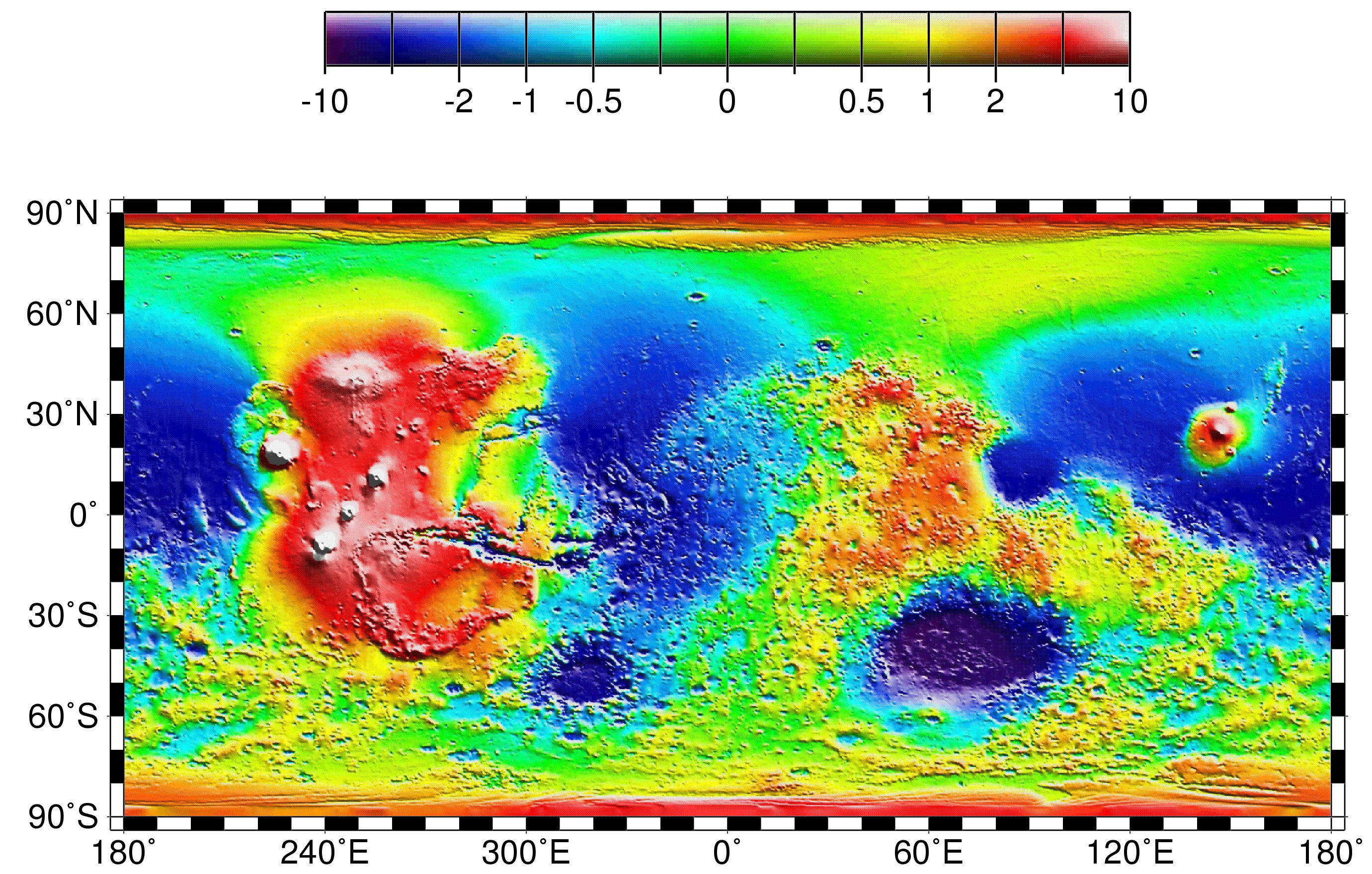
If you look at a false colour topographic map of Mars you will see very similar boundaries. Assume that older ground is higher ground then you have plausible interlocking features as you go back in time.

See here for an example.

Locked

Who is online

Users browsing this forum: No registered users and 13 guests