Stars in an Electric Universe, (2011 John Chappell Memorial Paper), Wallace W. Thornhill
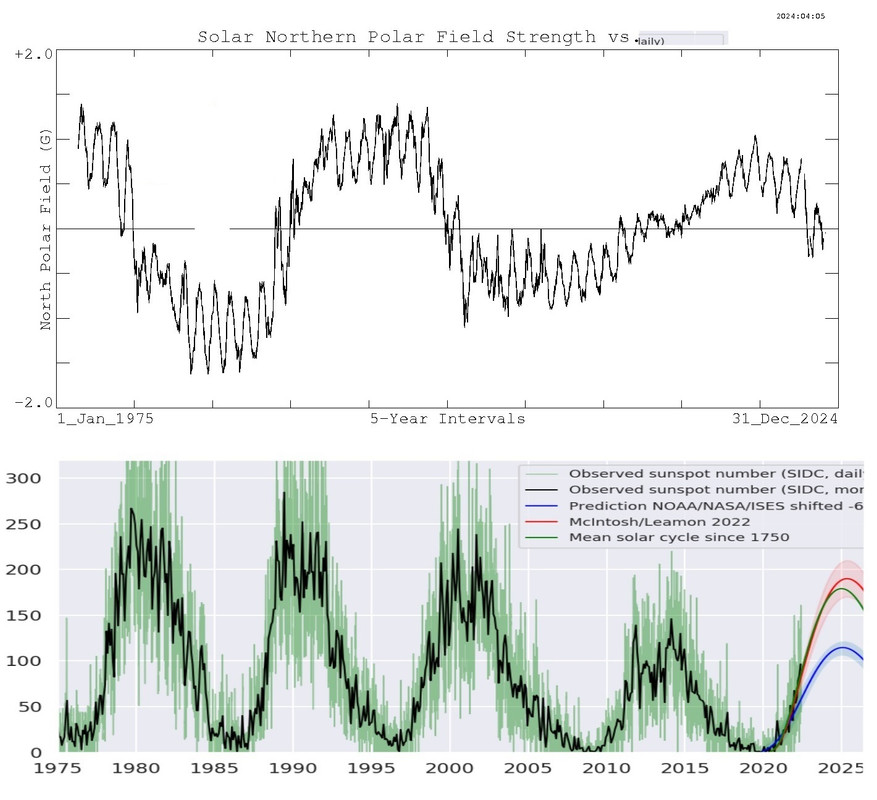
There have been frequent articles announcing the Sun's upcoming pole reversal scheduled for 2024 and which occurs about every 11 years.
I have not yet seen a mechanism described to account for this so I will propose a partial hypothesis here along with an evolutionary development of Wal Thornhill's Electric Sun Model.
The earth's magnetic poles are confusingly described in literature. The geographic and alleged magnetic north pole of the earth actually corresponds to the south pole if we consider the earth as a magnet. Earth's north geographic and magnetic poles attract the north end of a compass needle which is the historical reason for the confusing nomenclature.

The sun's magnetic poles are also confusingly described. The northern geographic pole of the sun always corresponds to the northern geographic pole of the earth. If viewed from above the north pole of either the sun or earth, the rotation observed will be counterclockwise.
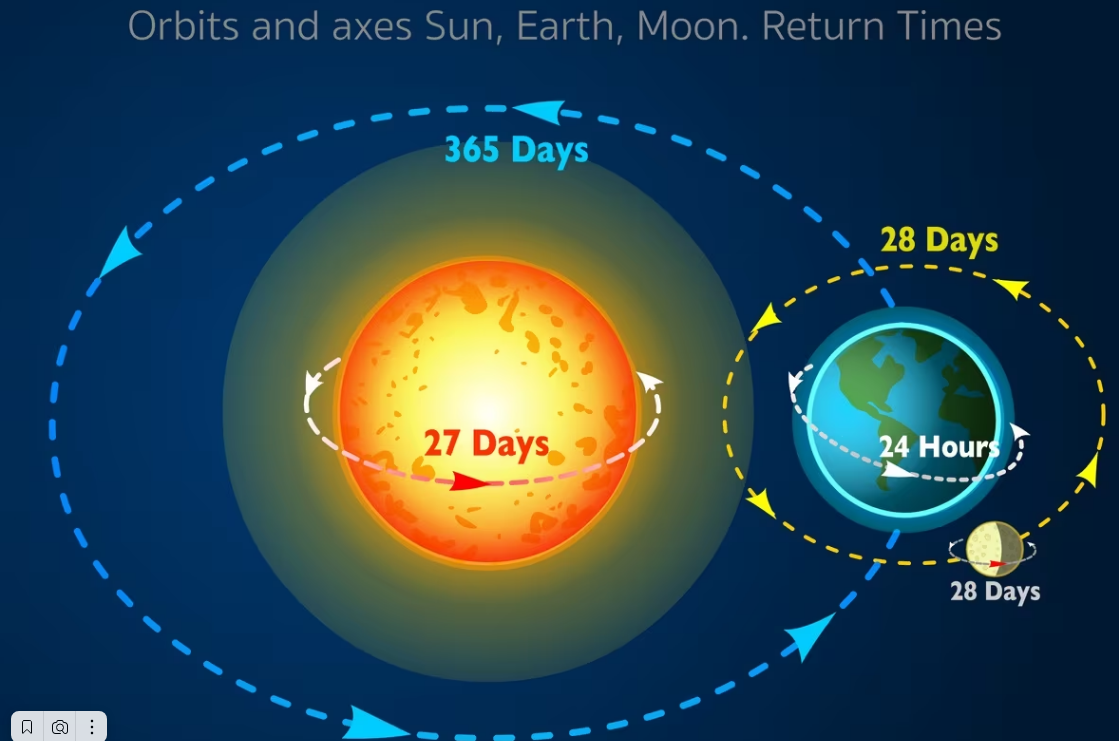
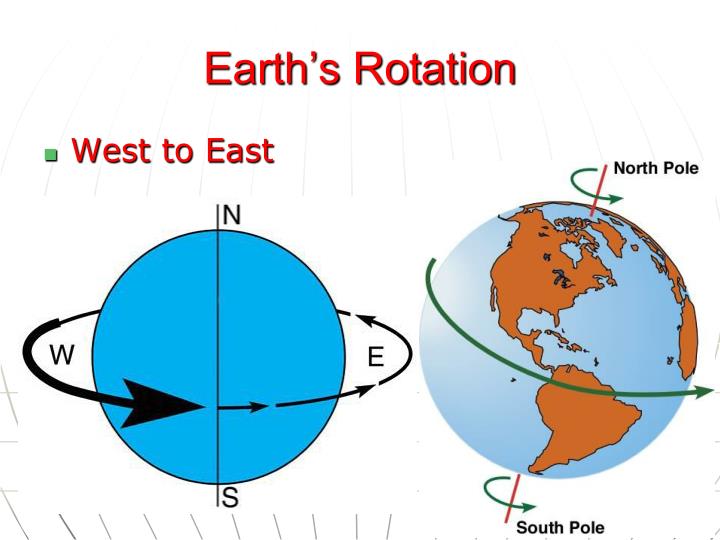
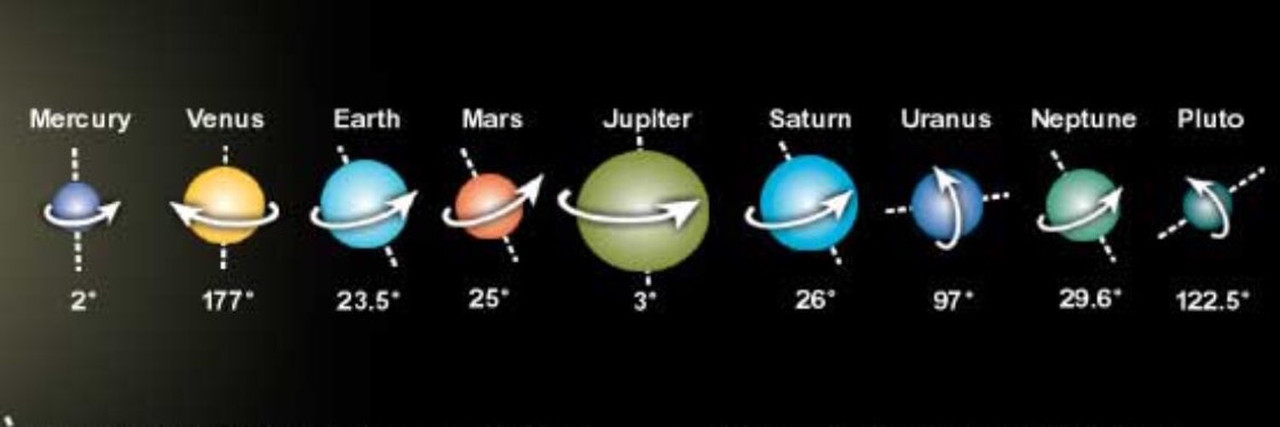
Actually all of the planets in the solar system except for Venus, Uranus and Pluto will rotate counterclockwise when observed from the north poles.
To make things even more confusing, instead of describing the sun's magnetic poles are magnetic north or south, they are usually referred to as positive (corresponds to north pole of a magnet) or negative (corresponds to the south pole of a magnet). The sun's magnetic poles change direction every 11 years, adding more confusion.
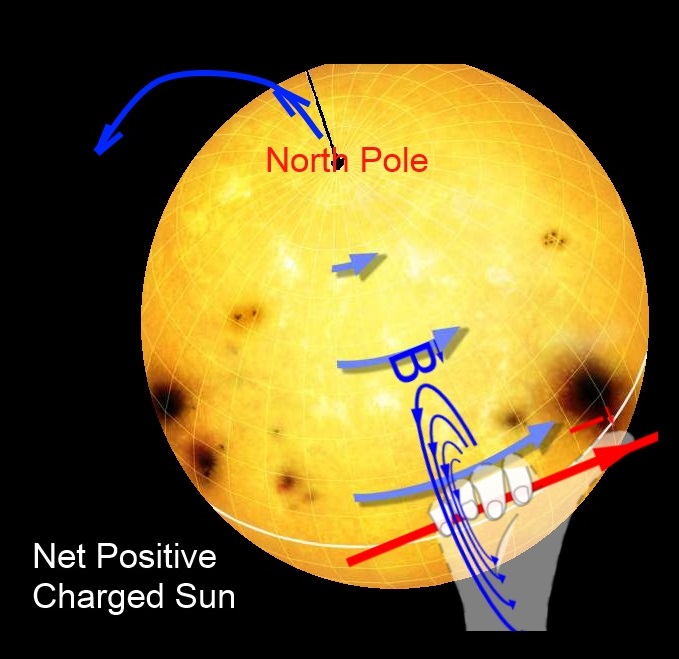
From 2014 to 2023, the sun's northern geographic pole would be best represented by the north (positive) end of a bar magnet.
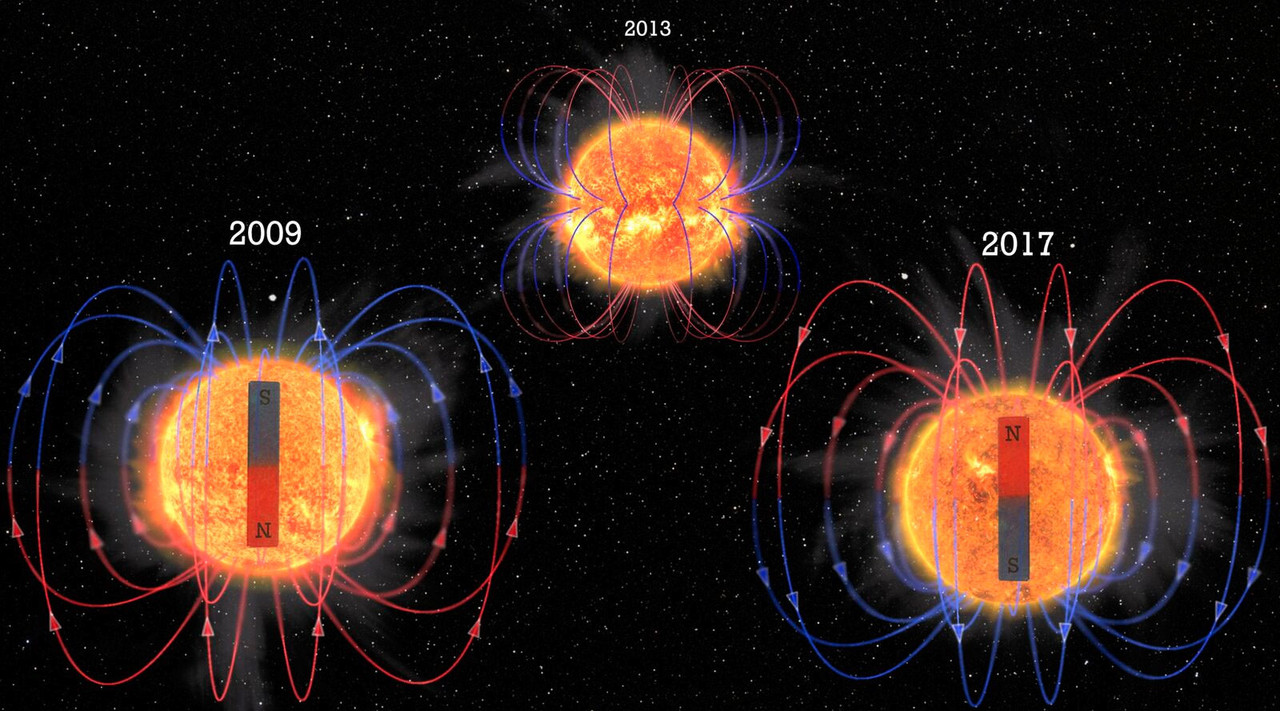
After the sun's pole flip in 2024, the sun's northern geographic pole would correspond to the south (negative) end of a bar magnet.
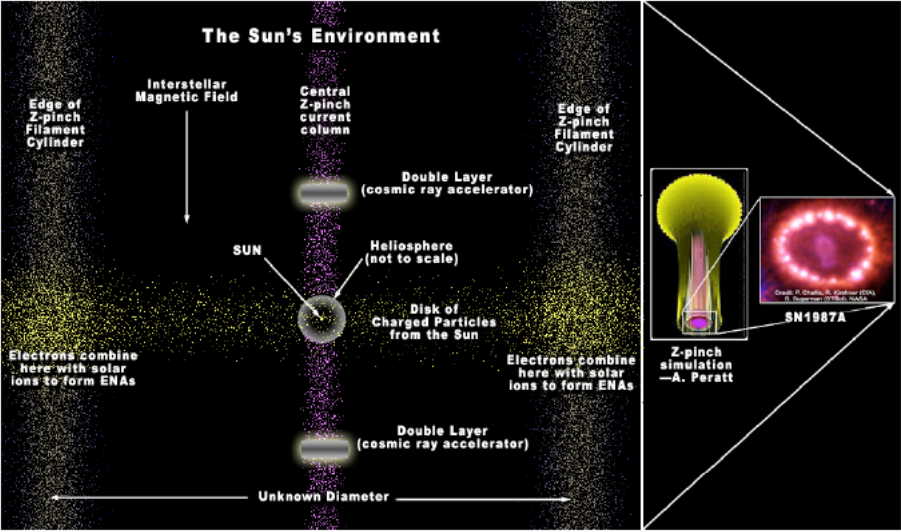
Thornhill referred to Dr. Scott's electric sun model in the paper cited above.
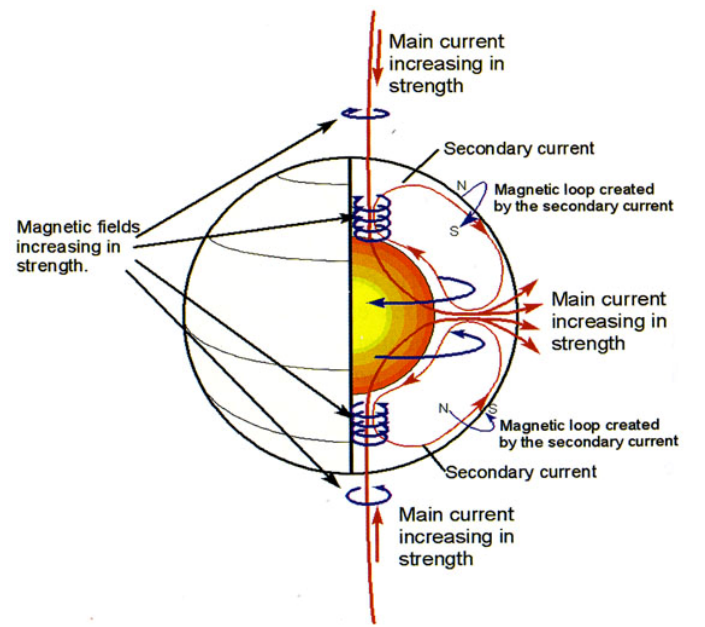
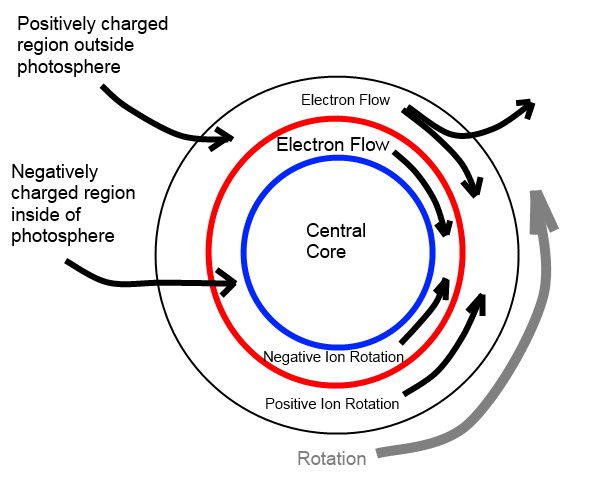
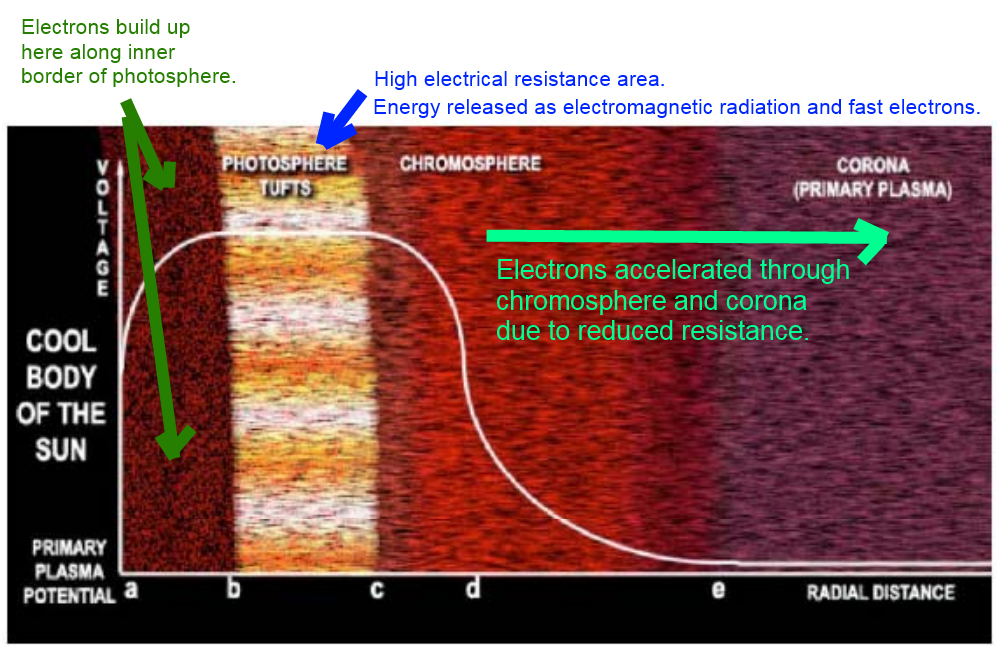
Wal Thornhill provided some insights into his version of an electric sun model when he described the photosphere as a transistor, controlling the rate of solar discharge. I added some comments to his model to describe the photosphere as an resistive element or insulator in a capacitor.
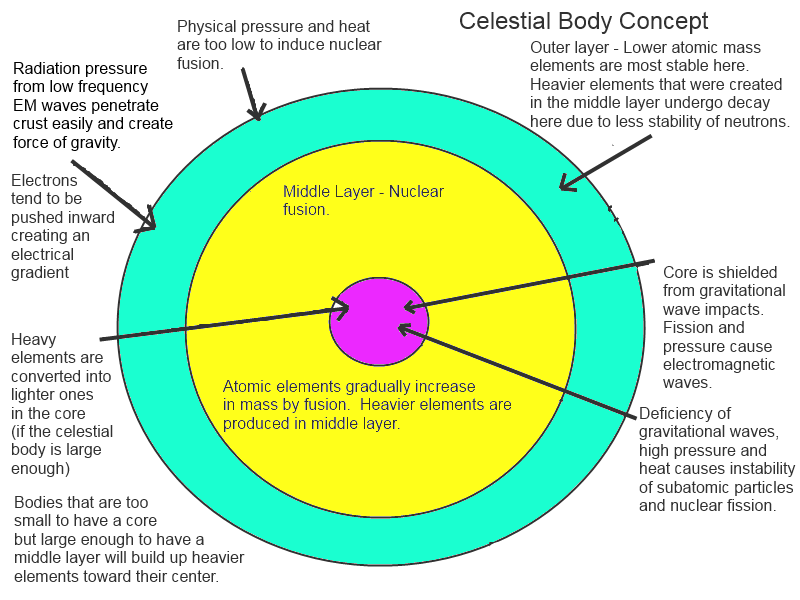
I have expanded these hypotheses to model the sun more closely with Alfven's unipolar inductor model of the galaxy and my recent posts about celestial body electricity generation.
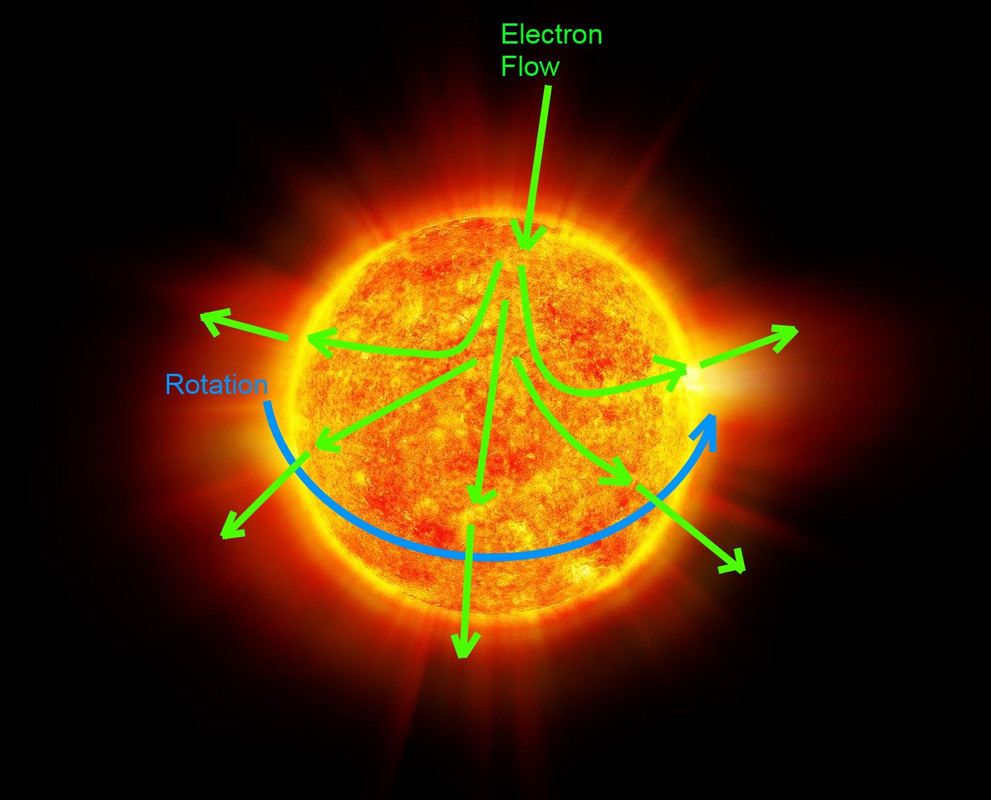
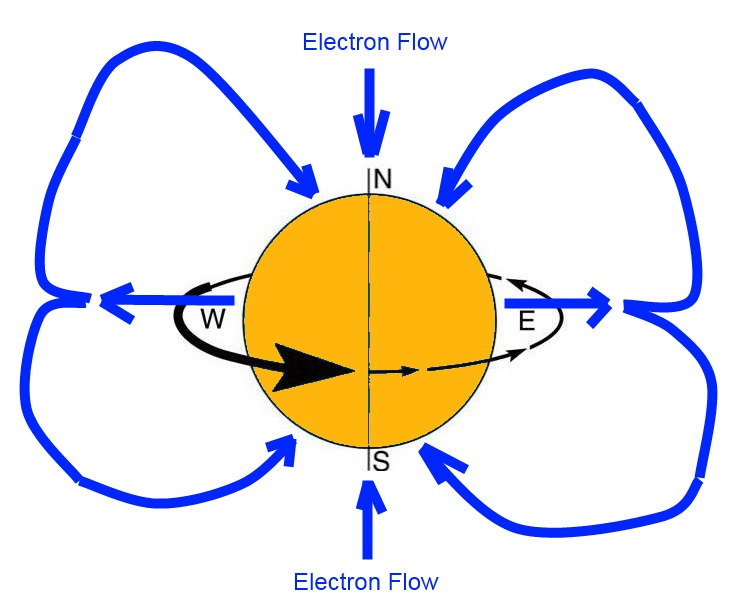
Thornhill described the photosphere as a transistor that controlled current flow. I tried to envision how this would work but I have not yet come up with a solution. A transistor would require 3 connections. I do feel confident about the photosphere acting as a resistive element or insulator and the 2 connections being the inner and outer photosphere. With the sun acting as a generator, electrons would flow into the north and south geographic poles and the moving charges within the sun's body would propel the electrons outward using mechanisms I described in this post:
https://thunderbolts.info/wp/forum3/php ... php?t=1185
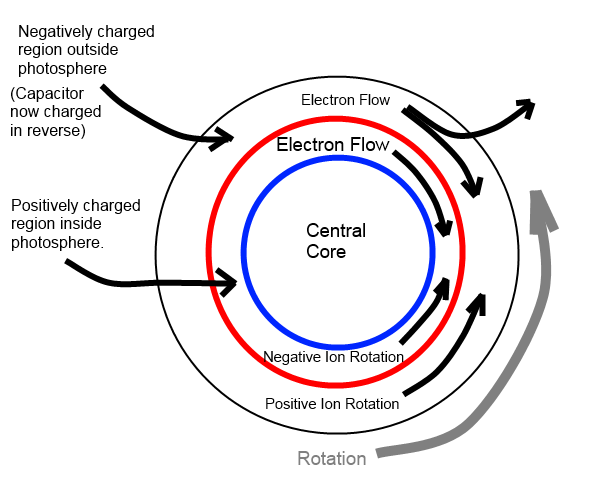
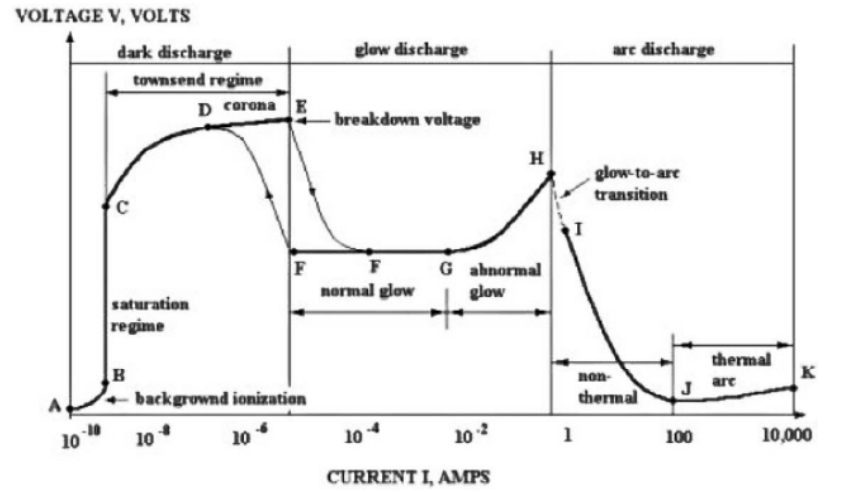
Using the photosphere as a resistive element or insulator, the electrons from inside the body of the sun would meet resistance there and build up a negative charge along the inner edge of the photosphere. Since an insulating effect of the photosphere would create what is essentially a large capacitor, we would expect a positive charge to develop on the outer edge of the photosphere to balance out the negative charges inside.
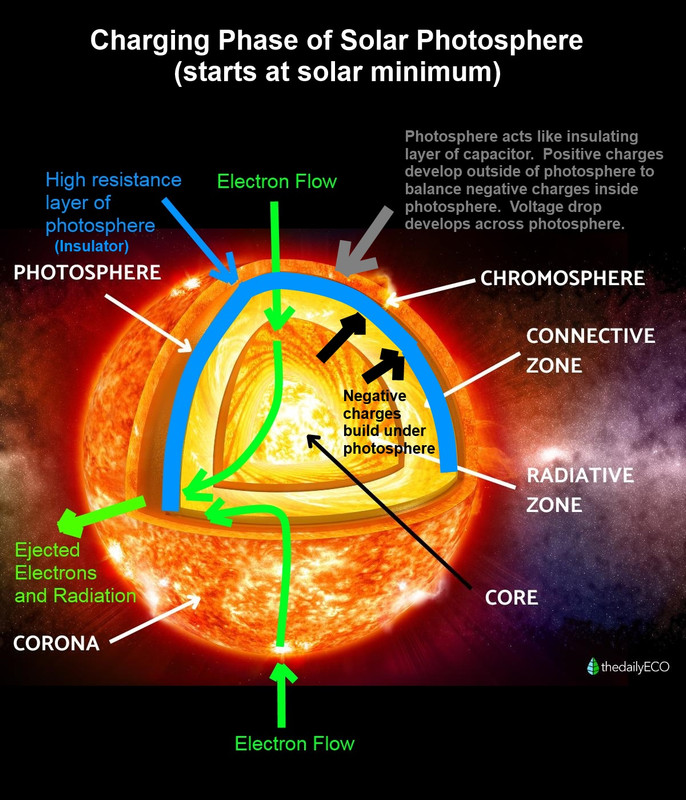
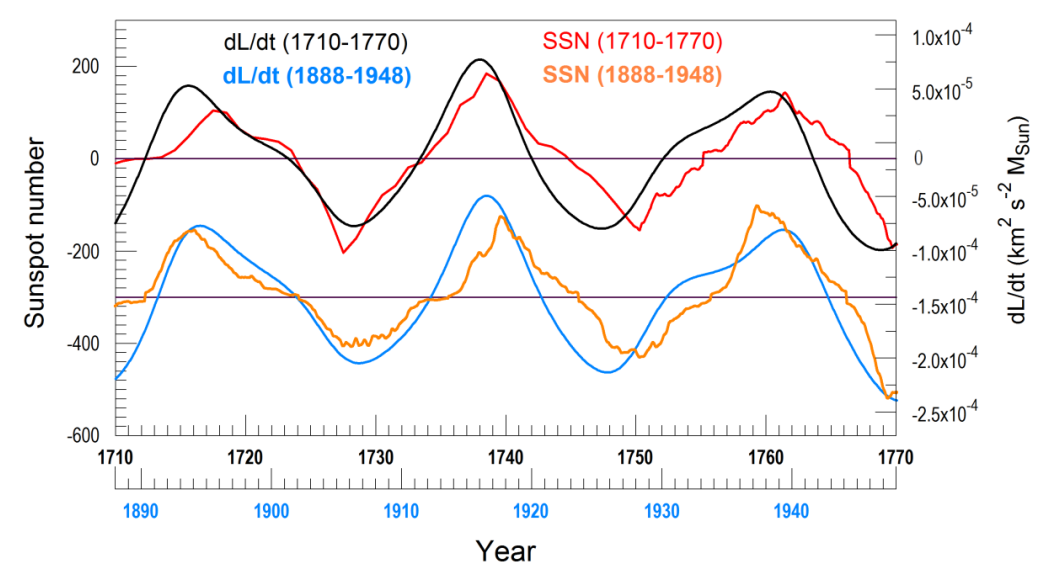
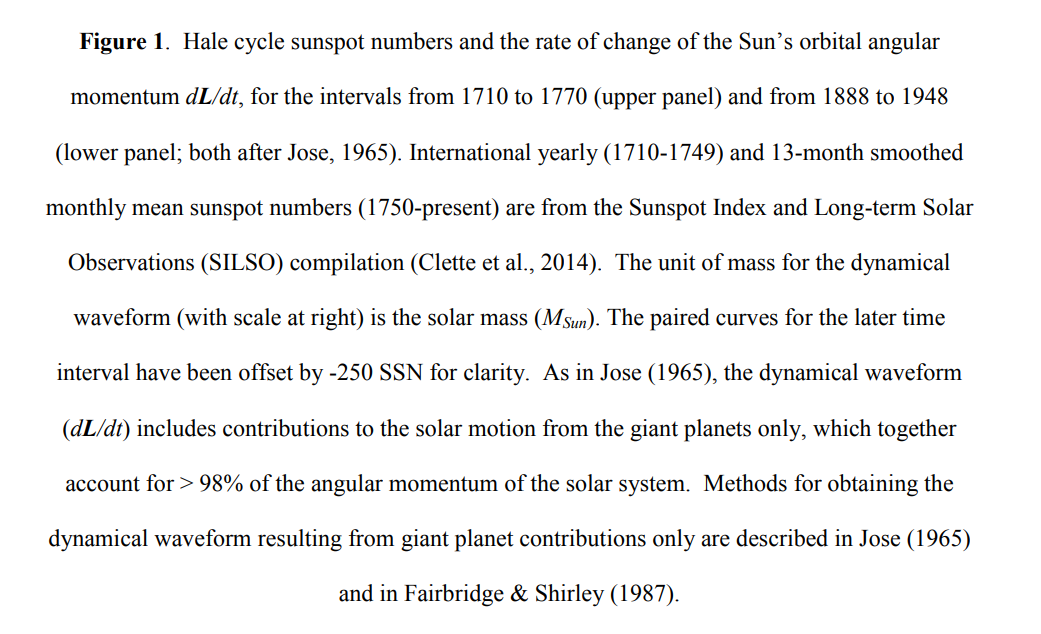
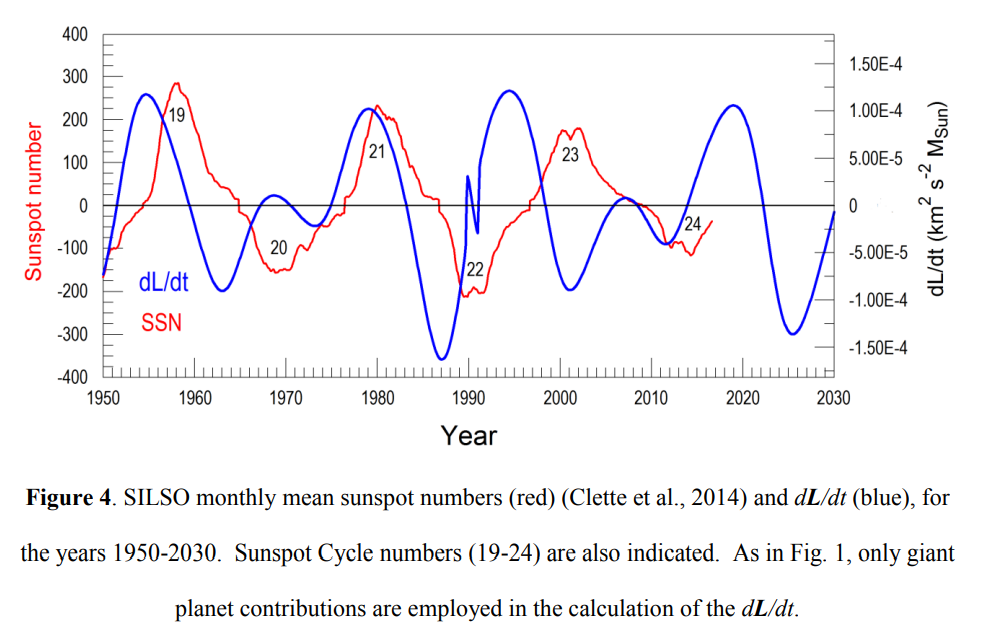
What has been described above is a positive charging scenario which would generate a north magnetic pole at the north geographic pole of the sun. The charging would continue through the 11 year solar minimum. In reality, the charges reverse about every 11 years as shown in the following graph. After charging during the solar minimum, discharging would follow for the next 11 years during solar maximum.
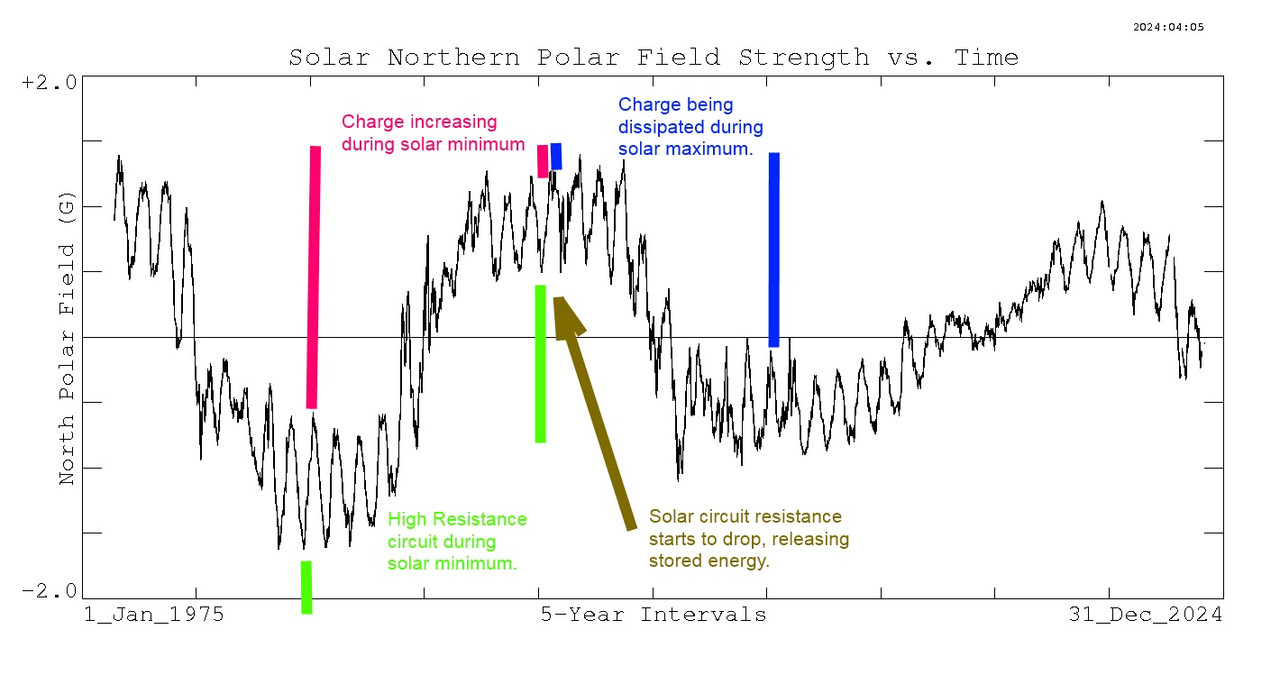
The mechanism for the 22 year cycle remains elusive. I have read hypotheses about planetary alignments and current sheet changes but none have been overly convincing thus far.